• How to Plan a Handmade Wardrobe (So that Everything Gets Worn) – The simple system I use…

    If you’ve sewn plenty of clothes but still feel like you have nothing to wear, this post is for you. Welcome to episode three of my Intentional Sewing series!

    In the first two posts, we explored why handmade clothes often go unworn and how to choose sewing projects you’ll actually wear. Today, we’re diving into how to plan a handmade wardrobe—so your creations actually work together and get worn. This is about what to do before you buy fabric, choose a pattern, or start sewing.

    As always, I’m right here on this journey with you. I’ve moved from sewing anything and everything to slowly building a more curated handmade wardrobe that suits my life—and I’m sharing what’s worked for me in case it helps you too.

    You can watch the third YouTube video in this mini series here 👇🏻

    1. Think of Your Wardrobe as a System

    One of the biggest mindset shifts for me has been thinking of my wardrobe as a system, not just a collection of individual garments. Wardrobes work best when pieces support each other, rather than standing alone.

    Think about how your items mix and match, layer, and coordinate. When everything plays well together, getting dressed becomes easier and more joyful.

    2. Define Your Core Garments

    Your core garments are the pieces you reach for most often—the ones you wear multiple times a week without thinking.

    For me, my core looks like:

    • Wide-legged trousers and jeans
    • Lots of layering tops (I’m always cold!)
    • Knitwear pieces
    • Joggers for home and dog walks (yes, it’s slightly embarrassing!)

    I used to feel guilty making the same thing over and over. But I’ve come to realise that repetition is what makes a wardrobe work. You can then complement these core garments with supporting pieces like jackets, shirts and knitwear.

    Some of my favourite repeating pieces:

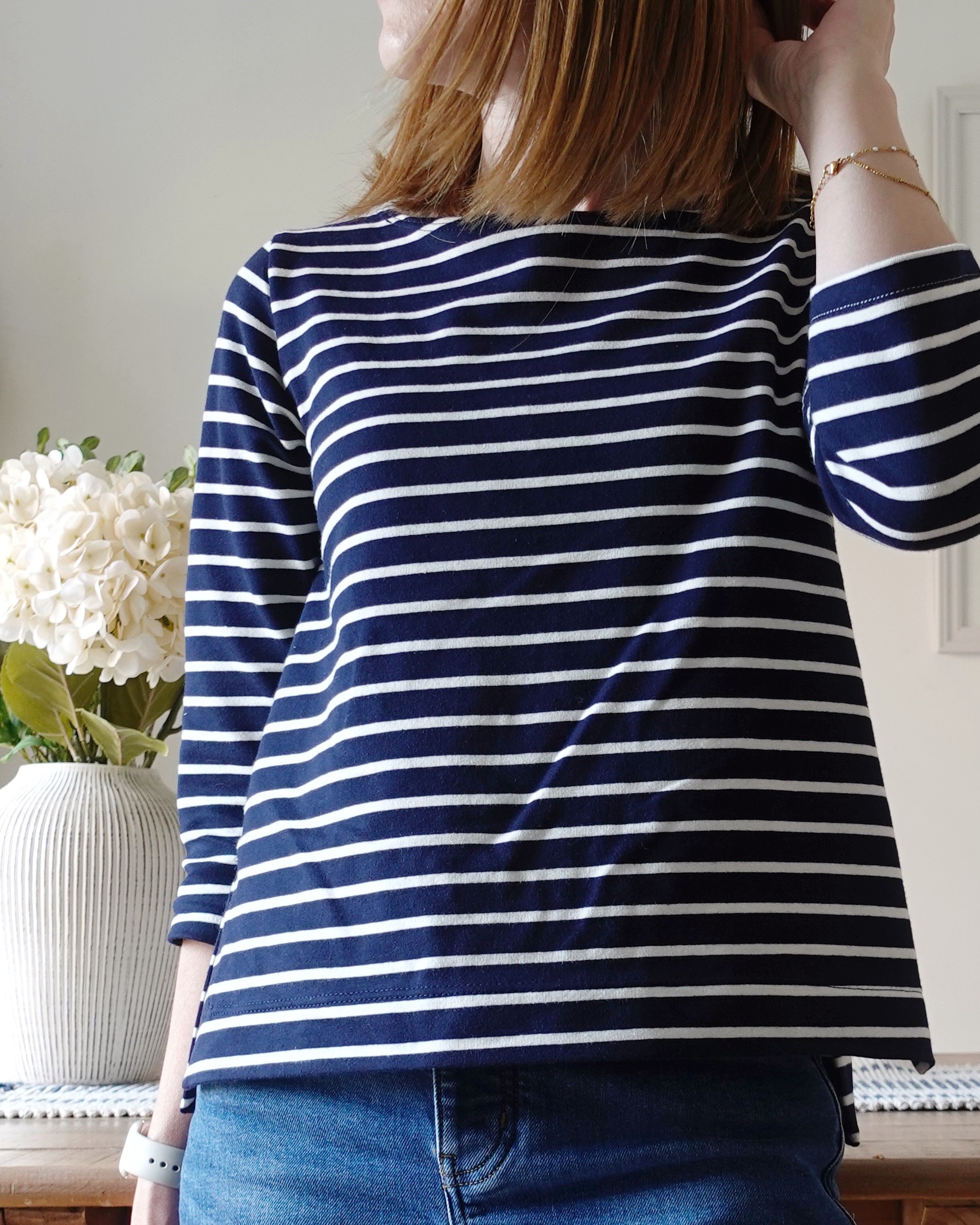
    • Agnes Top – clingy, flattering neckline, perfect for layering
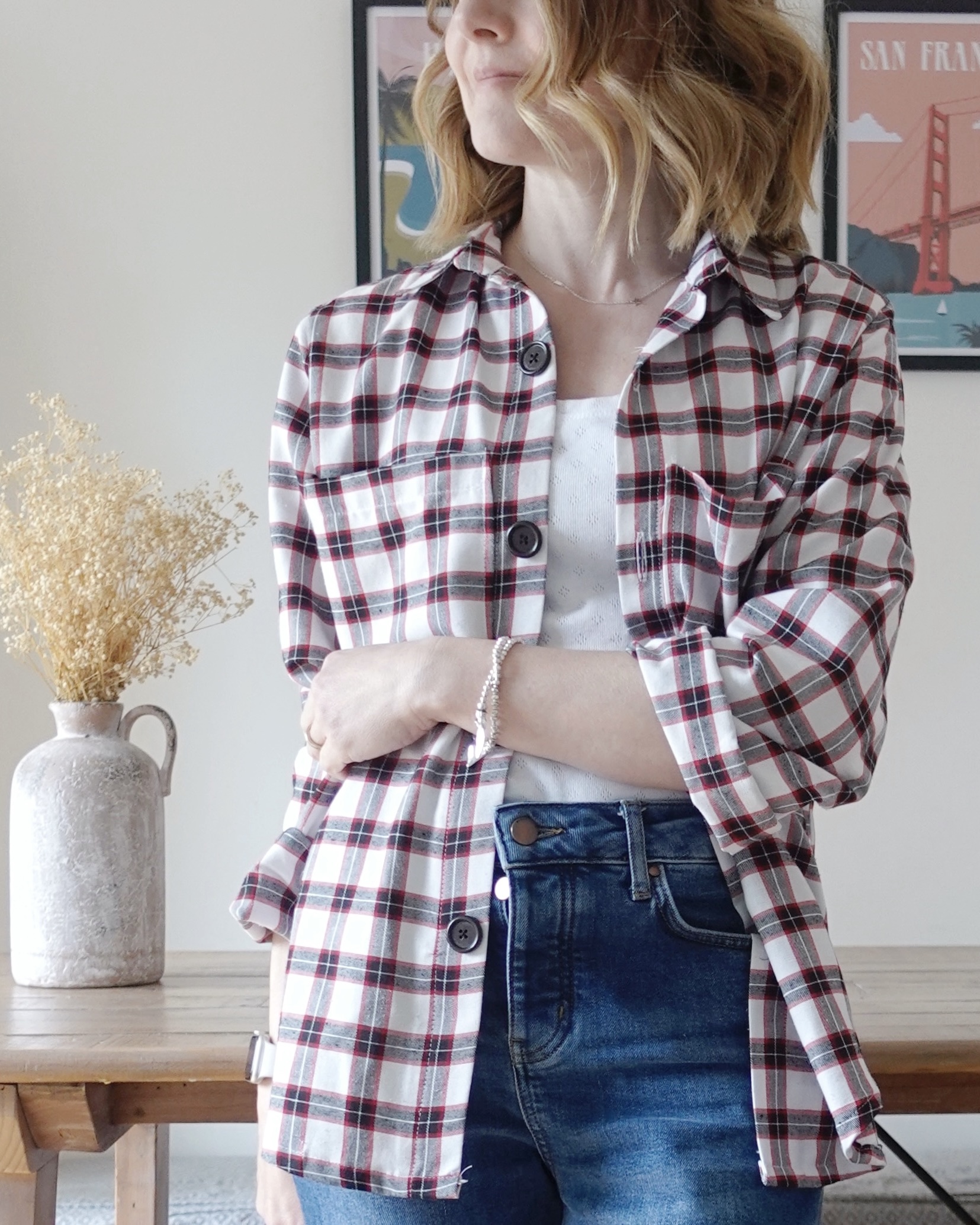
    • Logan Shacket – oversized, cozy, and layers beautifully

    Action point: If you only made 10 garments this year, what would they actually be?
    3. Choose a Limited Colour Palette

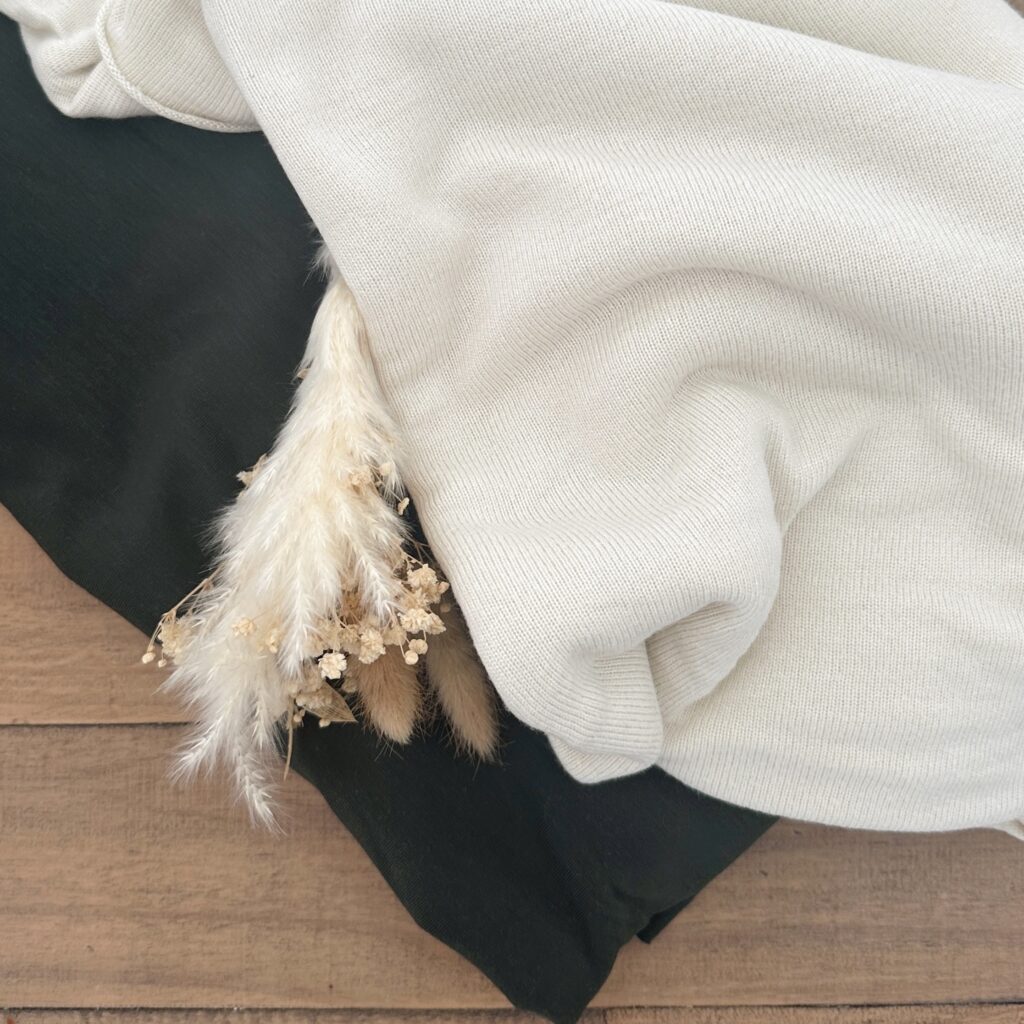
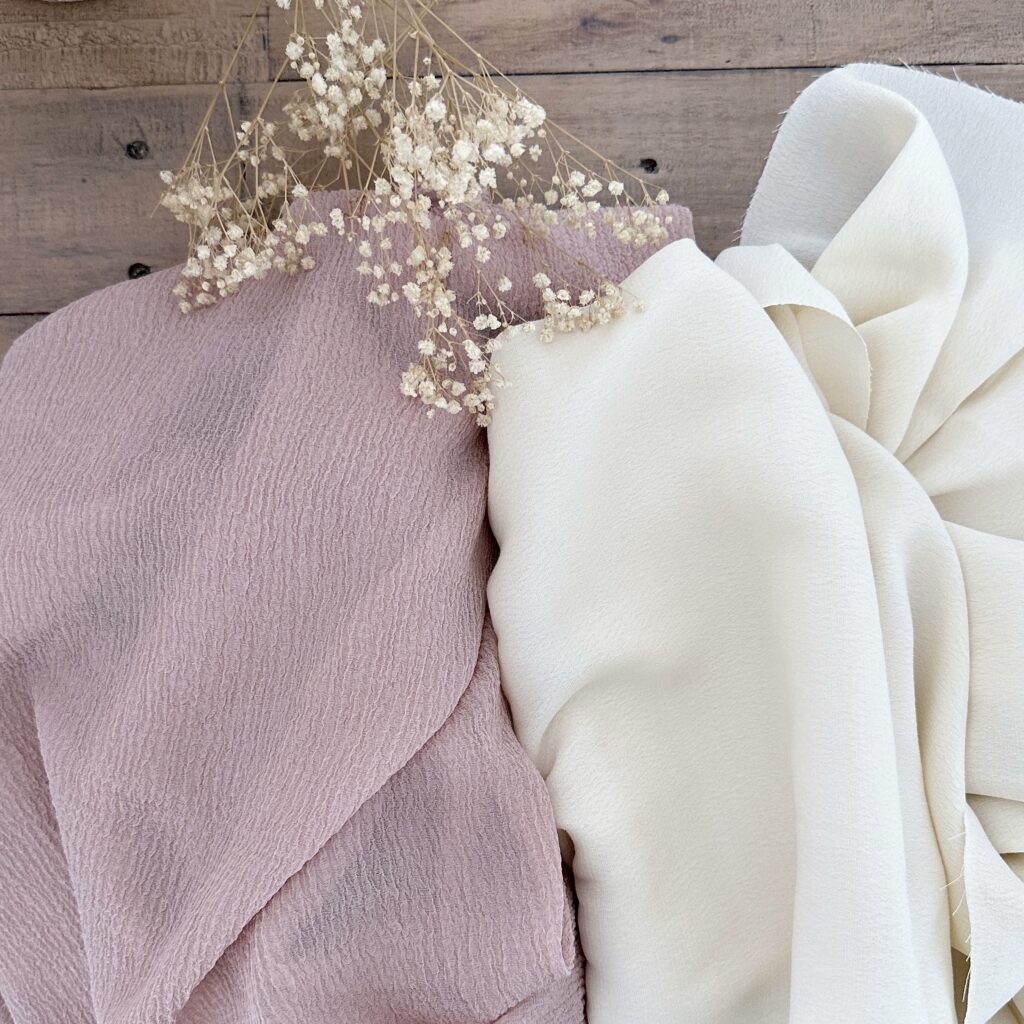
    A limited palette has transformed my wardrobe over the past few years. I wear a lot of neutrals, accented with earthy tones that work together well. Having my colour analysis done has also helped me make confident choices in what suits me best and I would highly recommend it (and that’s coming from someone who was initially highly sceptical!).

    Benefits of a limited palette:

    • Easier outfit building
    • Fewer orphan garments

    A simple way to start:

    • 1–2 neutrals
    • 2–3 main colours
    • 1 optional accent

    This isn’t permanent—you can add more colours as you discover what works for you. The surprise? It doesn’t feel boring; it feels calm. And it makes saying “no” to fabrics that won’t coordinate so much easier.

    4. Plan Before You Buy Fabric

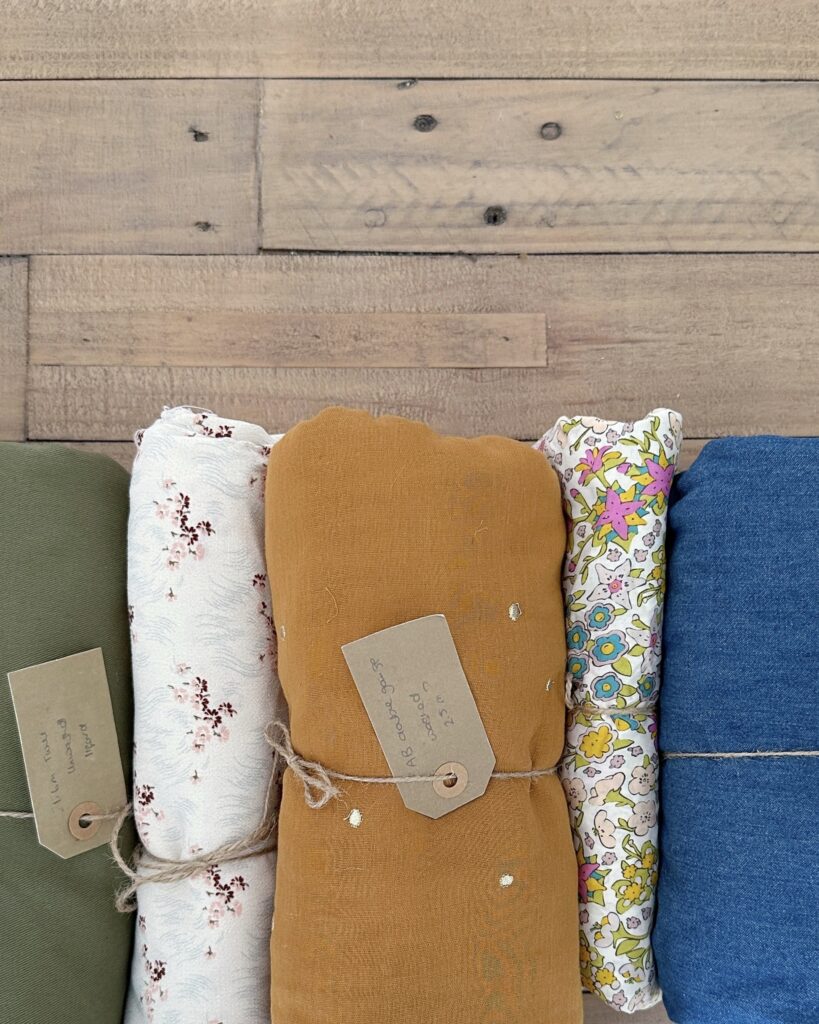
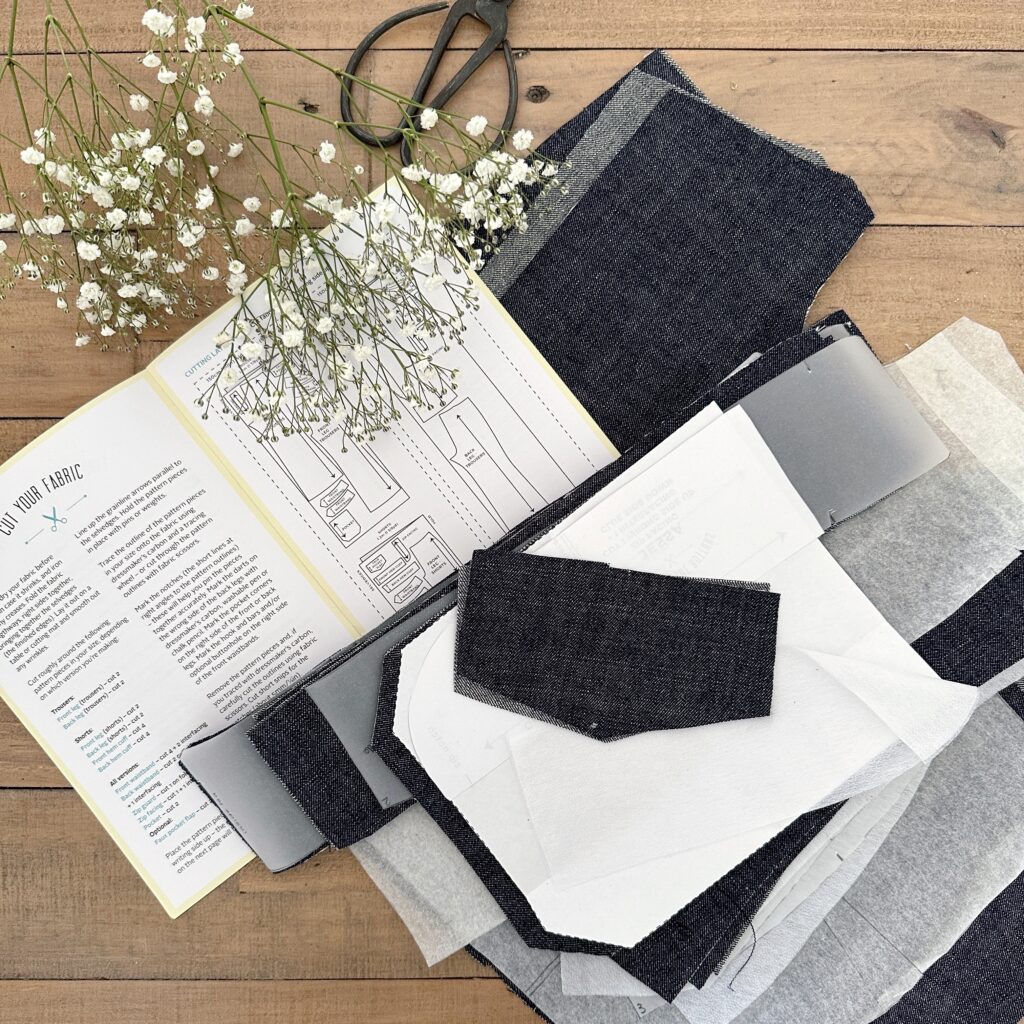
    This step alone prevents countless unworn garments. More and more these days, I ‘try’ to have a plan for each fabric purchase: I try to make sure that know the pattern and purpose before I shop.

    Ask yourself a few simple questions:

    • What will this replace (if anything)?
    • What will this support?

    This isn’t about guilt—my fabric stash is still growing—but I try more so to think of fabric as a future garment, not just a project.
    5. Leave Space for Evolution

    Planning your wardrobe doesn’t mean stripping the joy out of sewing. It’s a mindset that keeps you intentional, especially if you’re feeling overwhelmed.

    Remember: wardrobes evolve with your:

    • Lifestyle
    • Body
    • Confidence

    Seasonal check-ins are a great way to see what’s working, and remove pieces that no longer serve you—without guilt.

    Need a Little Extra Help?

    If you want help planning your own handmade wardrobe, I have a wardrobe planner and extra resources on this topic over on Patreon. These tools make it simple to take what you’ve learned here and start building a wardrobe that works for your life, your style, and your sewing goals.

    Wrapping Up the Series

    If you’ve been following along with all three parts of the Intentional Sewing series, I hope you now have the tools to help you to sew a wardrobe you love.

    Here’s a recap of all the episodes in case you missed any. You can catch them all in this YouTube playlist too:

    1. Why You Never Wear Your Handmade Clothes
    2. How to Choose Sewing Projects You’ll Actually Wear
    3. How to Plan a Handmade Wardrobe

    Here’s a question for you: What’s one garment your wardrobe really needs right now? Let me know in the comments…

    I’d love to know what you thought of this ‘Intentional Sewing’ mini-series. Let me know if you’d like to see more of this style.

    Thanks so much for reading! Happy sewing…

    Sally xxx

    Want to save this for later?
    Pin this guide to your sewing or handmade wardrobe board on Pinterest so you can come back to it when planning your next project.
  • Why Your Handmade Clothes Aren’t Getting Worn (And What to Do About It)

    Have you ever finished sewing a beautiful garment — only for it to quietly collect dust in your wardrobe? If so, you’re not alone and I’ve been there too more frequently than I’d like to admit. Many sewists find themselves with clothes they love making but never actually wear. In today’s blog post (and in my latest YouTube video), I’m breaking down the real reasons this happens — and, most importantly, what you can do to fix it.

    In my opinion, there are five reasons why your handmade garments aren’t getting worn and these are as follows:

    1. You’re sewing for the ‘idea’ and not your lifestyle

    Those vintage style dresses might look beautiful and be fun to sew, but if you’re a busy mum running around after small children and spending most of your time at home or out in the park, those dresses might not be practical for the season of life you’re currently in (I speak highly from experience here as this was me in the early days of my sewing).

    2. Ignoring or rushing through fit issues

    This is a tricky one isn’t it because, lets face it, getting the right fit is hard and it can be tempting to just brush over the fact that the shoulders feel a little tight in that dress or that top is pulling over the bust. We – and I very much include myself in this – would much rather rush through to the end and get the satisfaction of sewing and finishing a garment. Unfortunately though, it doesn’t take long for that garment to also start to gather dust in the wardrobe when after a couple of wears we really actually we feel completely uncomfortable and would rather change into something ready to wear!

    3. The wrong fabric choice

    I’ve spoken a lot recently about how I’m trying to change my relationship with buying fabric. Learning about the types of fabric that I love to wear has been a real game changer for me. I have thrown out, passed on or donated far too many handmade garments that I have not wanted to wear because I don’t like the fabric on me. I’ve learned over time that I hate to feel restricted in any way so crisp cotton shirts and dresses, most often aren’t for me. Instead I’ll opt for viscoses, rayons and twills which are softer and have more movement and likewise when it comes to jersey and knits, I’ll spend a little more on good quality fibres, knowing that in the long term the cost per wear will work out better.

    4. Sewing too quickly or skipping steps

    Please don’t judge me when I tell you that as a beginner, I would actively skips the steps of a pattern because I didn’t understand the purpose of the technique or the longevity that just taking that little bit longer to sew something would give a garment. Some embarrassing examples might be, skipping understitching resulting in a facing that just would not stay to the inside of a garment or not taking the time to wait for a hem to drop overnight and rushing to finish. Please let me know in the comments if you were the same – I don’t want to feel alone here!

    5. You’re missing the intention

    Intention for me looks like asking myself why do I want to sew this garment? Is it because it will teach me a new skill or technique, is it a garment or garment type that is currently lacking in my wardrobe and by making it I’m going to open up a whole range of other outfits I can put together. Is it because it will keep me warm on my dog walks or comfortable but put together on my work at home days when at the moment I’m just working in my scruffs (also me).  And just so that you don’t think I’m trying to rip all the fun out of your sewing, is it just because you love the look of the pattern, or the garment or you want to make use of a particular fabric and that’s ok too (as long as the fabric fits in with point three and you’re actually going to wear it of course!)

    So, how do we change this potential cycle that we might find ourselves in of having a handmade wardrobe full to bursting but not actually wearing any of it??

    Here are some things that have helped me to intentionally sew a handmade wardrobe that I love to wear:

    Sewing with wardrobe gaps in mind…

    Regularly take stock of your wardrobe, see what you’re wearing and what you’re not (I do this with my ready to wear and handmade clothing). While you’re sorting, experiment with putting a few outfits together and taking photos of them on your phone so that you can refer back to them when you feel uninspired. If there’s a make or a garment that isn’t being worn, ask yourself why. Is it because you have nothing to wear it with (and that’s where the wardrobe gap sewing comes in). Is it because it feels uncomfortable to wear – a fit problem. Is it because you hate the fabric or the colour or the pattern and completely regret choosing it, I know I’ve had a few of those. If the reason for not wearing is the latter – remove it from your wardrobe and pass on to someone who can benefit from it or reuse the fabric if you can. One of the most uninspiring things in my opinion is having a wardrobe that you’re not only not wearing but that makes you feel guilty every time you open the doors.

    Sewing fewer projects but with better outcomes…

    This is also something I’ve taken on in my own sewing life over the past couple of years and it’s worked wonders for creating a wardrobe I love. I’m really thinking quality over quantity where fabric is concerned. I would much rather these days, invest in a quality fabric that I know I’ll love to wear than buy lots of sub standard fabrics resulting in more garments but less that I’ll actually get the wear out of.  Likewise slowing down and enjoying the process of sewing the garment, particularly if you’re using a beautiful fabric, making sure to be present and enjoy the techniques, even the ones that feel more boring than others. Slow down and enjoy all the parts of sewing yourself something well fitting and beautiful and that will last rather than rushing to churn out garment after garment. In my experience too, the garments that I’ve really taken my time over and put my best into are often again the ones I most love to wear and feel good in.

    Letting each project inform the next…

    Every time we sew something, we’re given really useful information. We learn about fit — where we like ease, where we don’t, and how much shaping we enjoy. We discover which necklines we actually like wearing. Each make also teaches us about fabric: what feels comfortable, what creases too much and makes us dread ironing, or what feels too stiff to enjoy.

    Our garments even teach us about how we like to sew — the techniques we enjoy most, and whether we prefer quick, simple projects or slower, more thoughtful sewing that challenges us. When we ignore all of this information, we often end up repeating the same frustrations.

    So, to close…

    All of what I’ve said today is intended as a growth mindset for sewing an intentional handmade wardrobe. When you’re starting out in sewing it’s normal, and educational, to want to sew all of the things and actually that’s fine because that’s how you learn not only in terms of learning sewing techniques and skills but also about what does and doesn’t work for you.

    Head over to my Patreon to download by ’Handmade Capsule Wardrobe Planner‘ plus more behind the scenes videos, sew-alongs and tutorials and stay tuned because I’ll have more coming up on YouTube on this topic over the next few weeks!

    Thanks you for reading and happy sewing!

    Sally xxx

    Want to save this for later?
    Pin this guide to your sewing or handmade wardrobe board on Pinterest so you can come back to it when planning your next project.
  • Re-learning the art of slow sewing (and why you might want to too)…

    In a world that moves faster every day, slow sewing feels like a breath of fresh air.

    Just before Christmas, I noticed something; I felt like I’d lost the joy I used to find in my sewing and I knew something needed to change. It’s so easy to rush through projects just to tick them off our to-do lists — but what happens when we slow down? When we take time to enjoy the feel of the fabric, focus on each stitch, and savour the rhythm of the process?

    Whenever I feel like my sewing joy is slipping away, I always return to smaller, easier, more mindful projects made with beautiful fabrics. A cute toy with pretty accessories, some simple patchwork, a quilted makeup bag, or even a cushion. Projects that don’t ask too much of me, but give a lot back in return.

    This week, I deliberately blocked out time in my diary just to sew whatever I fancied making. No big clothing goals. No skill challenges. Just sewing I could sit with and enjoy, without stress or pressure about the end result.

    I thoroughly enjoyed this time. It really filled my cup and helped me realise that it wasn’t the sewing process I’d fallen out of love with — it was the pressure of what I thought I should be making.

    If you fancy joining me for a couple of afternoons of slow sewing, I share the process in this week’s YouTube video. I sew up a pretty quilted zip pouch and work on my half square triangle quilt, chatting as I go. I’d love to have you sewing along with me on a slow, mindful project.
    Let me know in the comments what you love most about slow stitching — or what you’re thinking of sewing next, I’d love to know!

    Happy sewing…

    Sally xx

  • My 2025 Sewing Makes – Everything I Sewed, Loved & Learned

    At the end of every year, I love looking back through what I’ve made — not just to admire the pretty things (although let’s be honest, that’s part of it 👀), but to notice patterns in what I actually wear, what worked well, and what I’d do differently next time.

    So here it is: everything I made in 2025. There’s a lot of viscose, a lot of stripes, and more Tyra Trousers than any one person strictly needs… but I regret nothing.

    Grab a cup of tea and let’s get into it. 🧵☕

    Note: You can find links to all of the pattern and fabrics I mention in my ‘Reviewing 2025’ YouTube video here and if you love reviewing and planning as much as I do, you can download my FREE printable ‘Sewing year in Review’ checklist over on Patreon (you will need to sign up as a free member to access).

    The Tops (because I clearly love sewing tops)

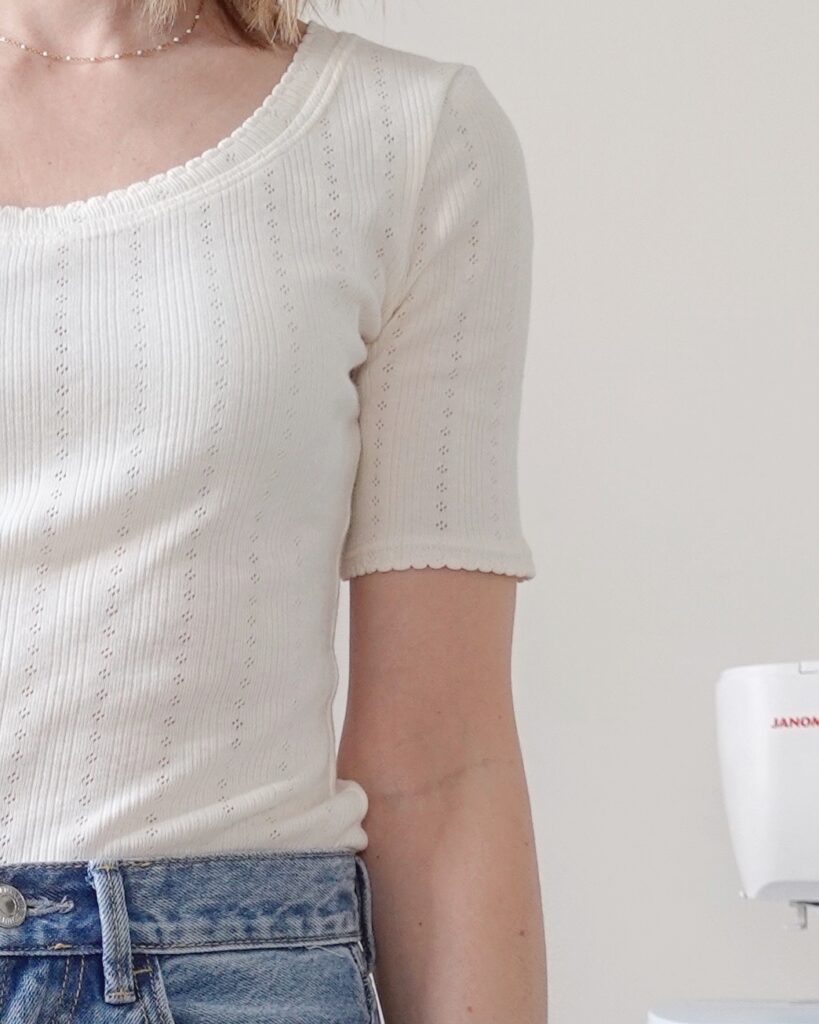
    I kicked things off with two Agnes Tops by Tilly and the Buttons — one in a brown rib knit jersey and another in a cream pointelle. The Agnes is such a solid wardrobe basic, and both of these get worn all the time. The pointelle version feels especially lovely and delicate, and it pairs beautifully with high-waisted trousers and as a layering piece underneath shirts and knits.

    I also made:

    • A hacked Sagebrush Top (Friday Pattern Company) in embroidered cotton – floaty, pretty, and perfect with jeans on warm early spring days. (You can watch the full sew-along video for this hack over on my Patreon by the way).
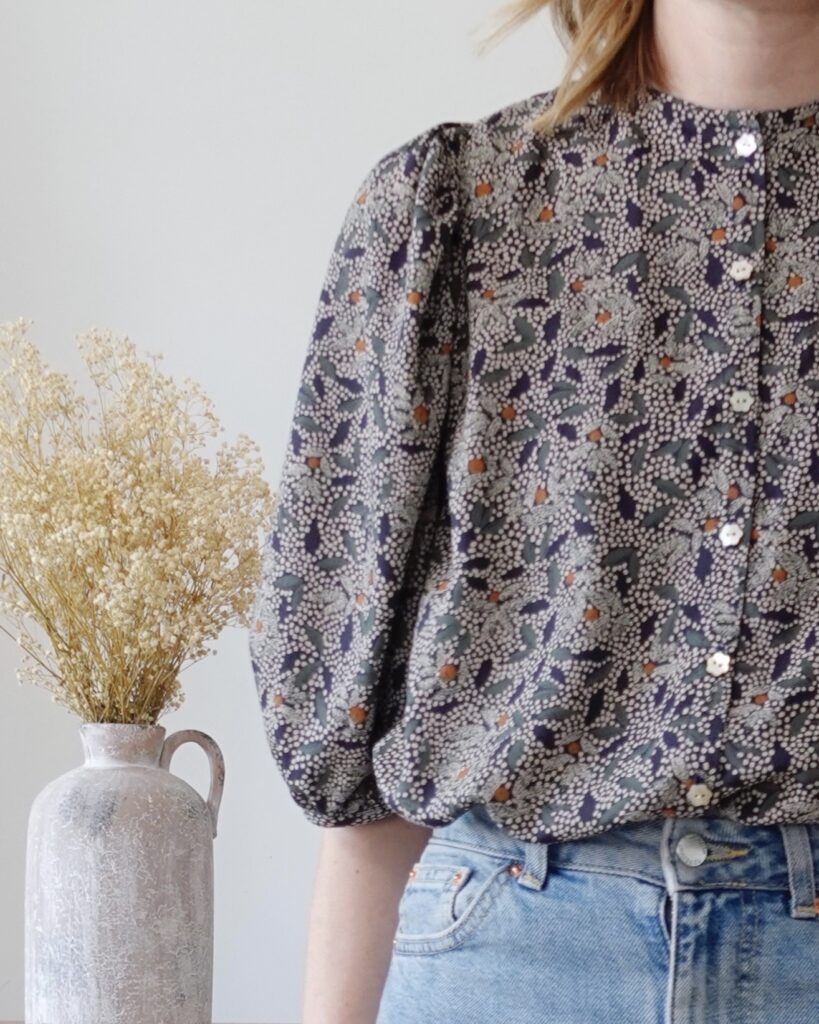
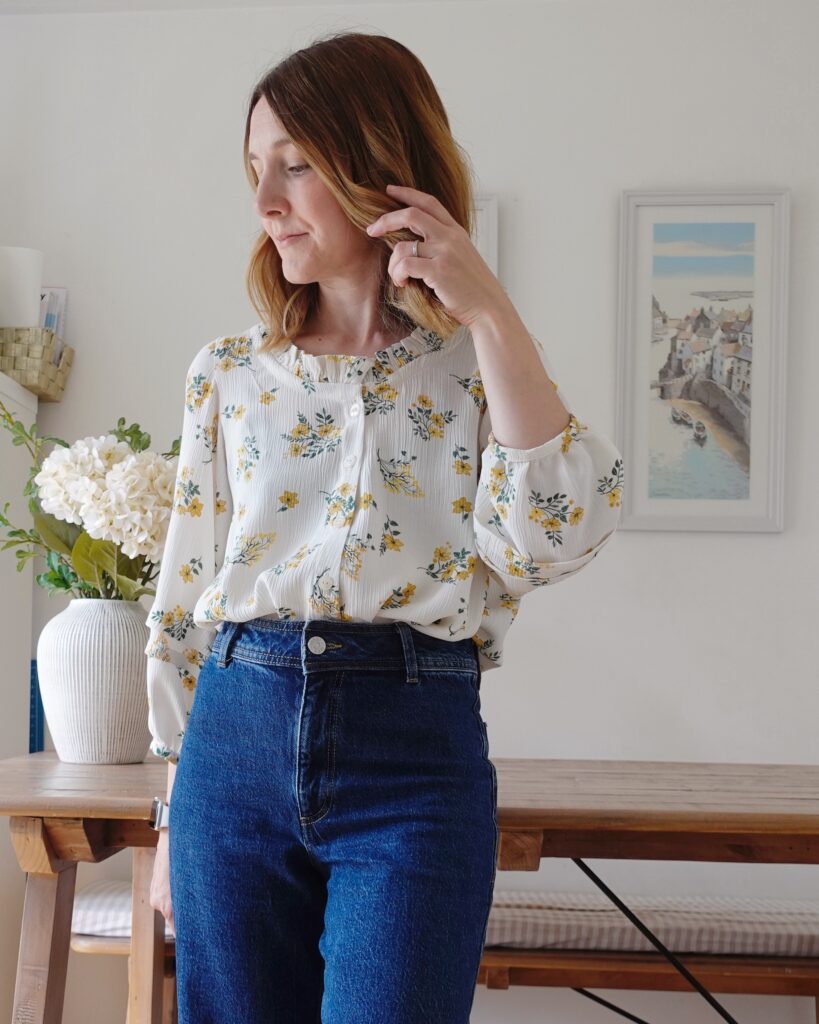
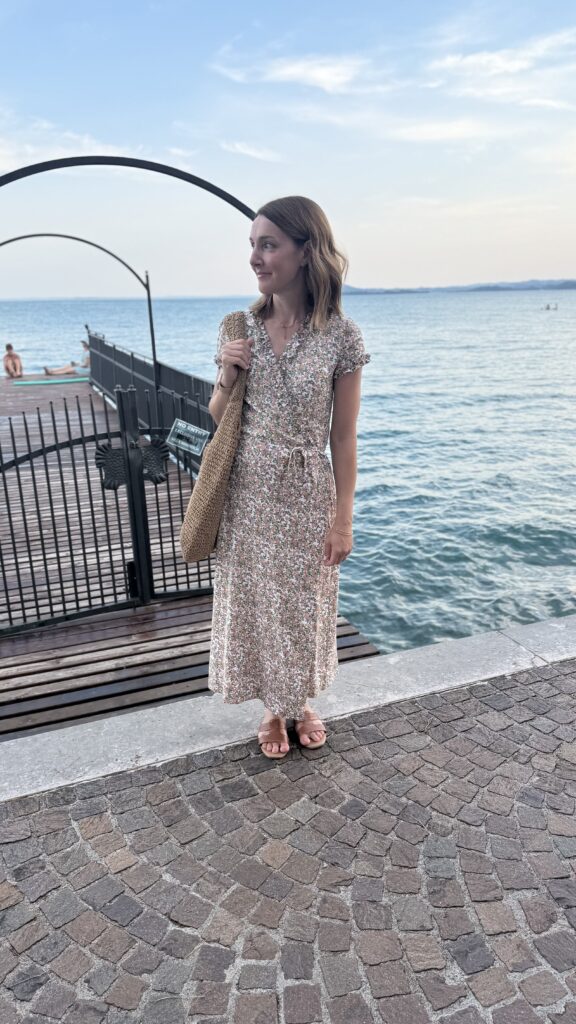
    • Almy Blouse (Style Arc) in floral viscose lawn – I absolutely love this Lady McElroy floral print!
    • Nephaline Blouse (Viviene Chen) in floral viscose crepe – a new pattern to me that I think will become a firm favourite.
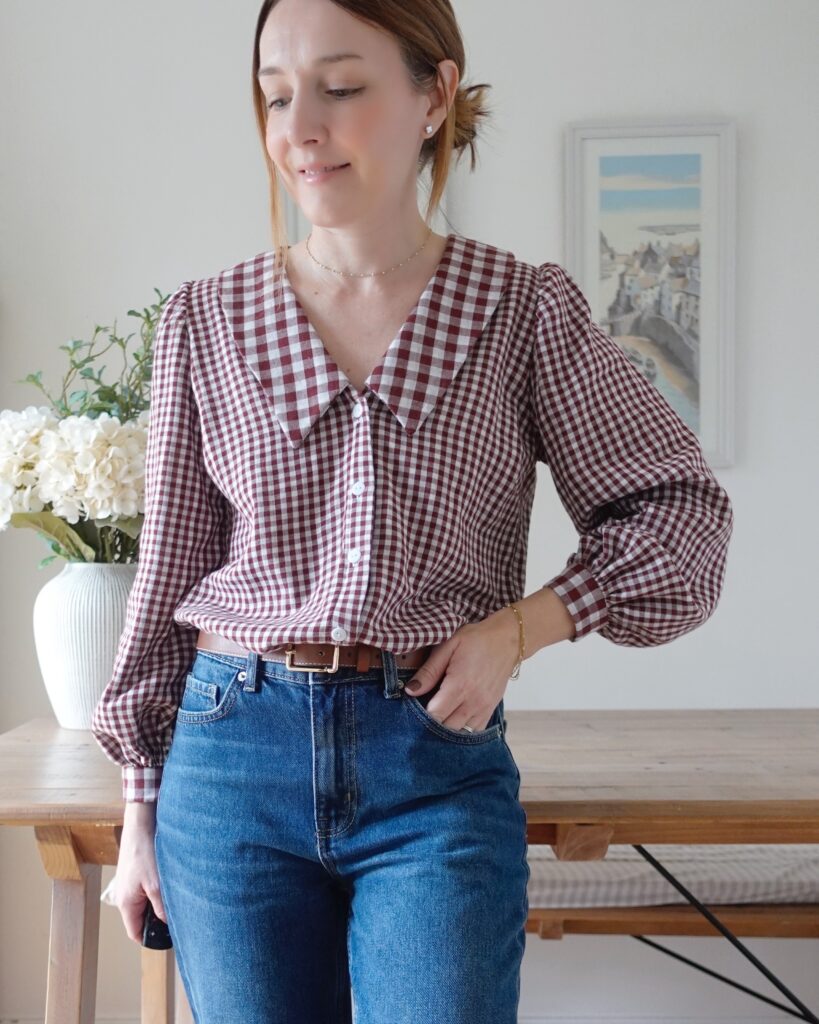
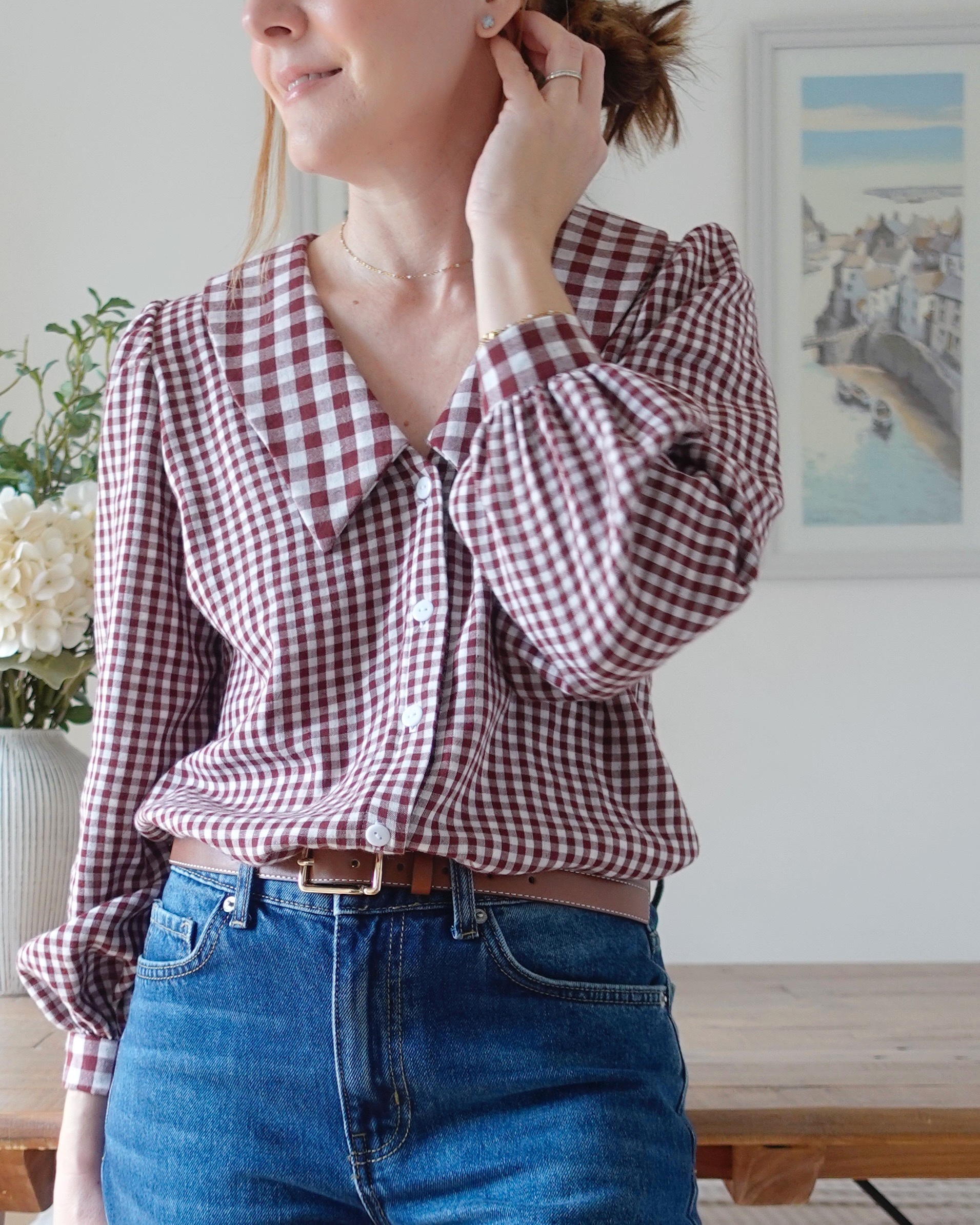
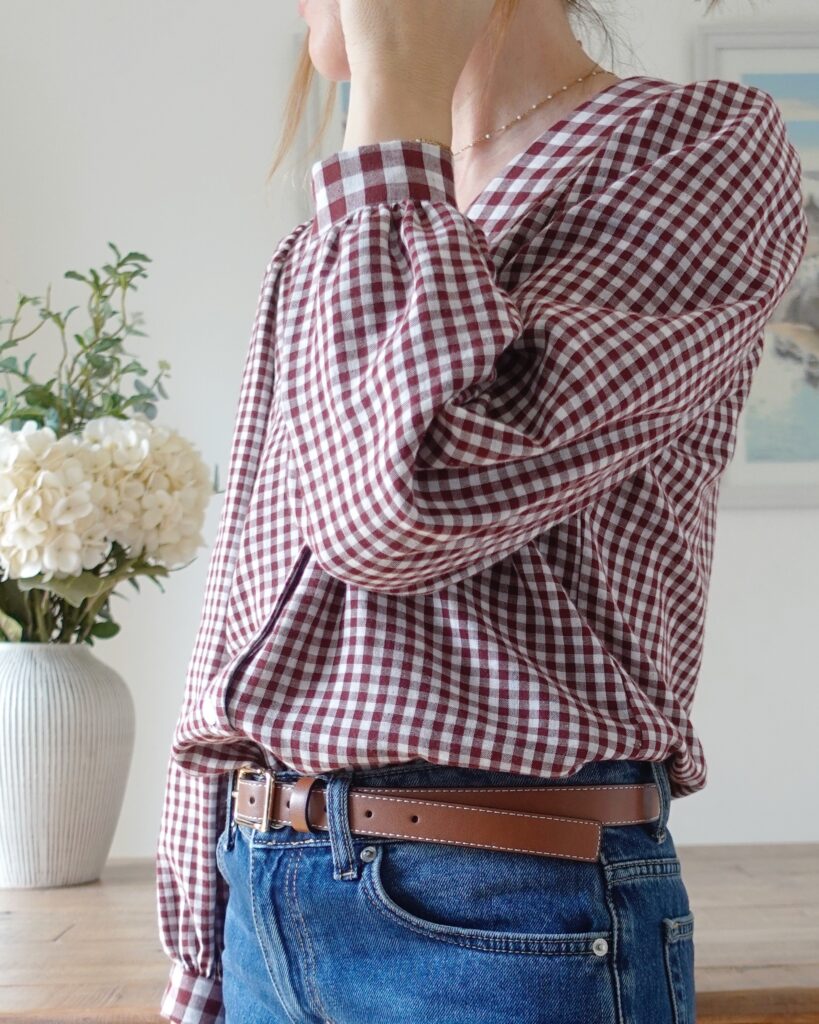
    • Patina Blouse (Friday Pattern Co.) in gingham cotton gauze – A High Street inspired top. I’ve had my eye on this Atelier Brunette gingham for ages so it was good to have a reason to finally buy it.
    • Ashton Top (Helen’s Closet) as part of a matching set (more on that later 👀).

    I’m noticing a theme here: breathable fabrics, relaxed silhouettes, and things I can throw on without thinking too hard.

    Dresses I Actually Wear

    I made a lot of dresses this year — and honestly, I wore most of them regularly in summer time, which feels like a win.

    Some highlights:

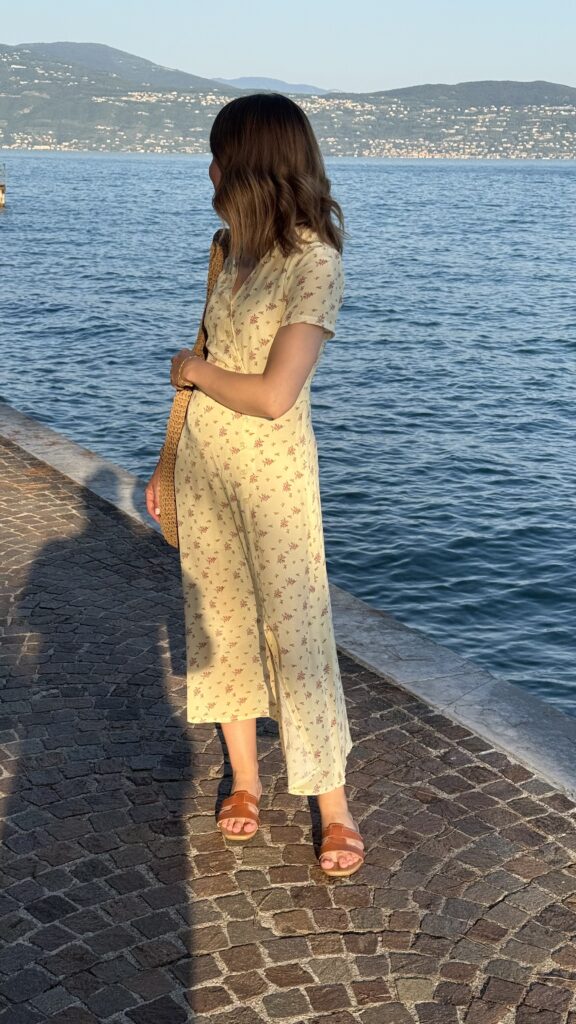
    • Annabelle Dress (Style Arc) in floral viscose – who doesn’t love a pretty wrap dress
    • Darling Ranges Dress v.3 (Megan Nielsen) in floral viscose linen. The Darling Ranges Dress is one of my most used sewing patterns but before last year I had never sewn version 3!
    • Pippa Dress (Sew Over It) in floral viscose another firm favourite dress pattern of mine
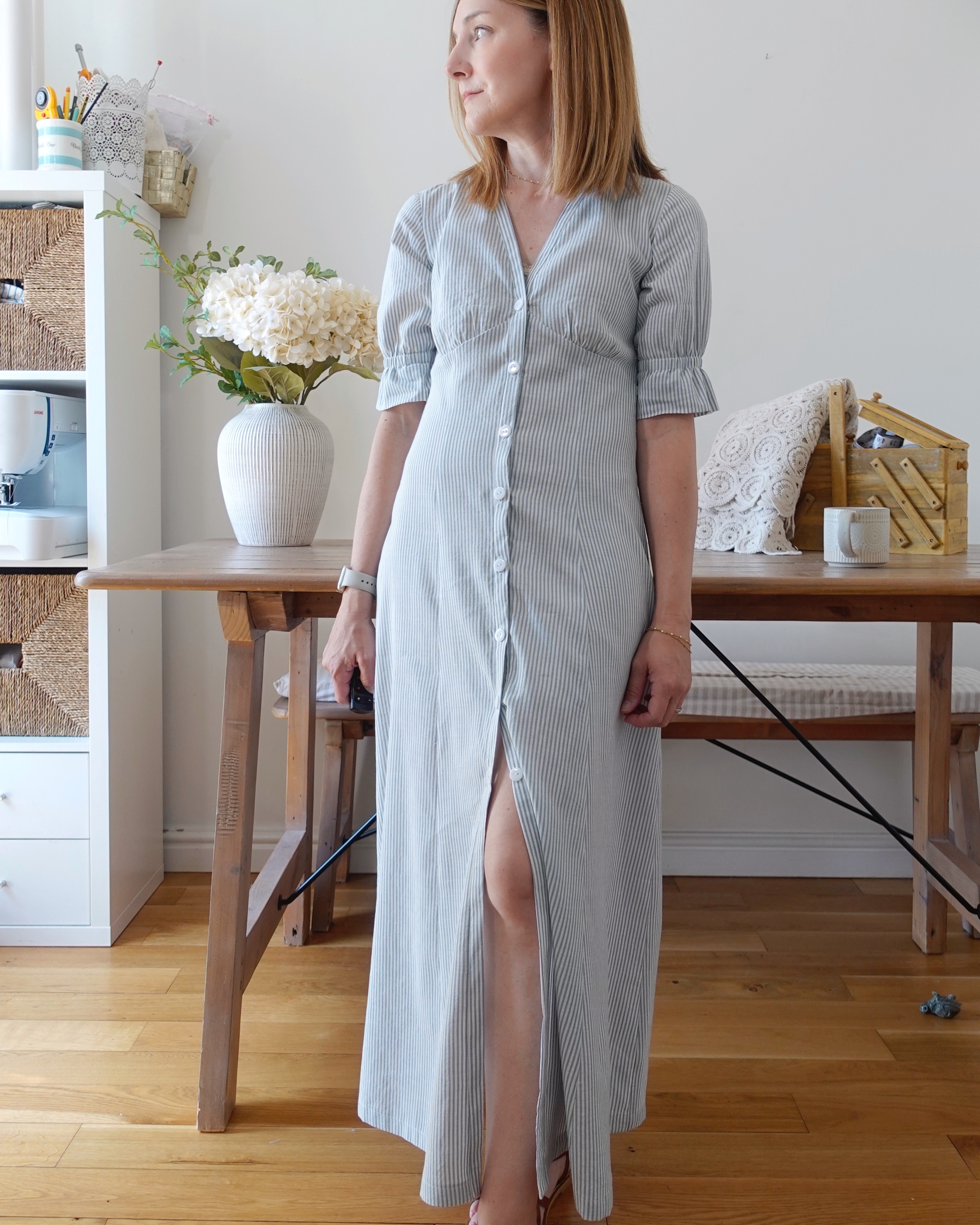
    • Taika Blouse Dress (Named) in stripe cotton. Another High Street inspired sew
    • Tess T-Shirt Dress (Closet Core) — an easy everyday staple – great for layering

    I’m definitely noticing a shift towards more simple silhouettes in my sewing where dresses are concerned. There’s not a gathered or fit and flare dress is sight! I always find the way our styles change over the years super interesting…!

    Playsuits, Shorts & Summer Sewing

    Summer sewing was very much about comfort and ease.

    I made two Safiya playsuits from Tilly and the Buttons’ Make It Simple book using viscoses from my stash — practical, wearable, and great for hot days. These were perfect on our dream family holiday to Florida!

    I also hacked:

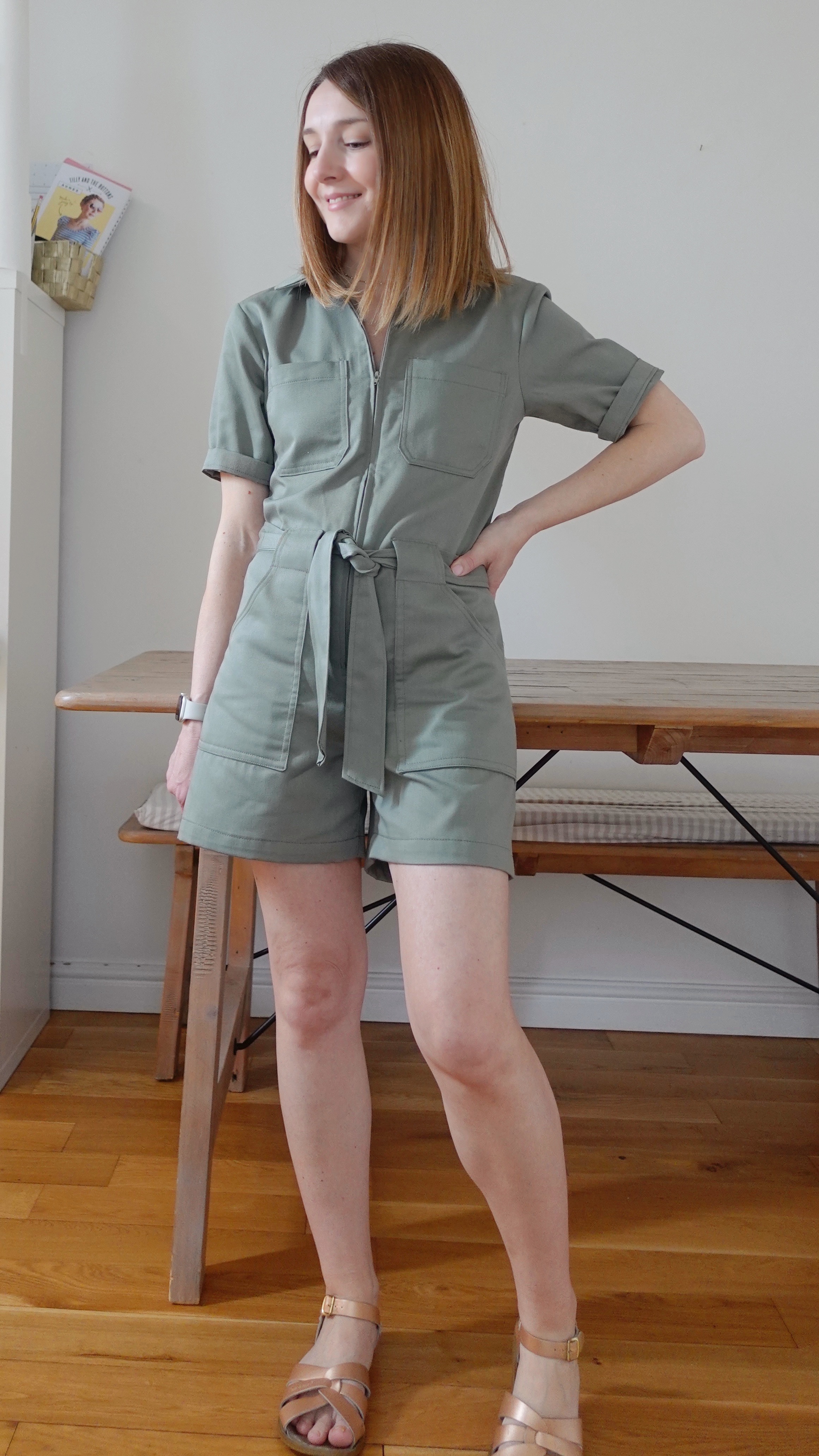
    • The Blanca Flight Suit (Closet Core) into a playsuit with shorts in viscose twill — one of my favourite hacks of the year (see Patreon for the full sew along video).

    Other summer makes:

    • Ashton Top + Safiya Trousers shorts in floral broderie anglaise — dreamy fabric, lovely set.
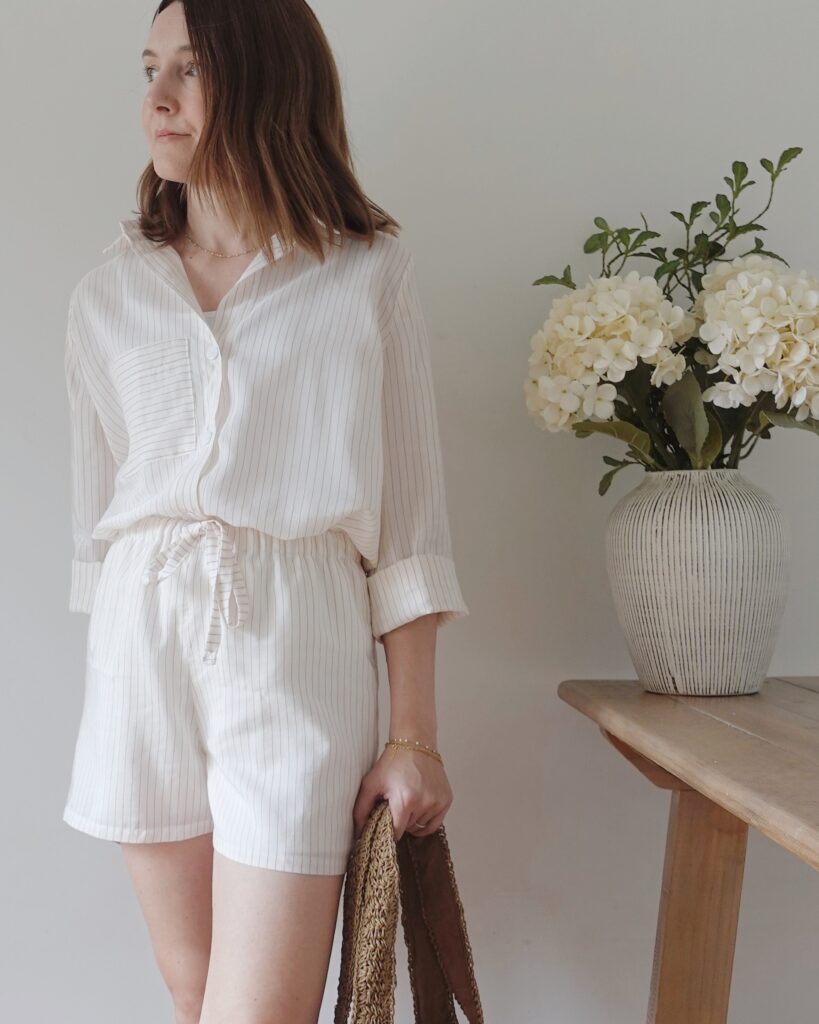
    • Safiya Shorts + Logan Shacket (Style Arc) as a co-ord in stripe cotton lawn. I do love a co-ord.
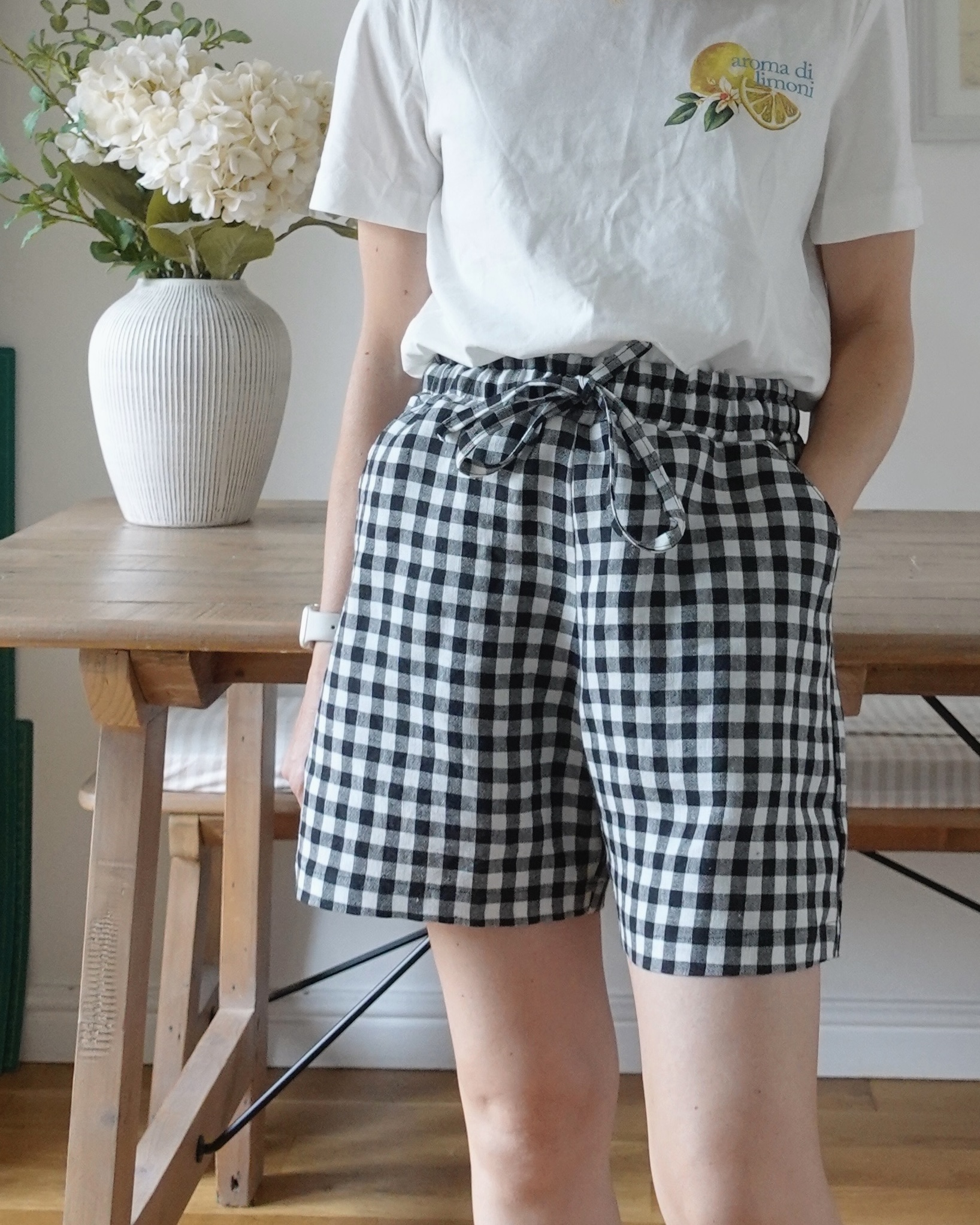
    • Tyra Trousers hacked into shorts in gingham washed linen — because I love the Tyra’s, clearly!

    The Reign of the Tyra Trousers

    Let’s address the elephant in the room. I sewed a LOT of Tyra Trousers by Ploen Patterns this year (what’s new):

    • Beige linen
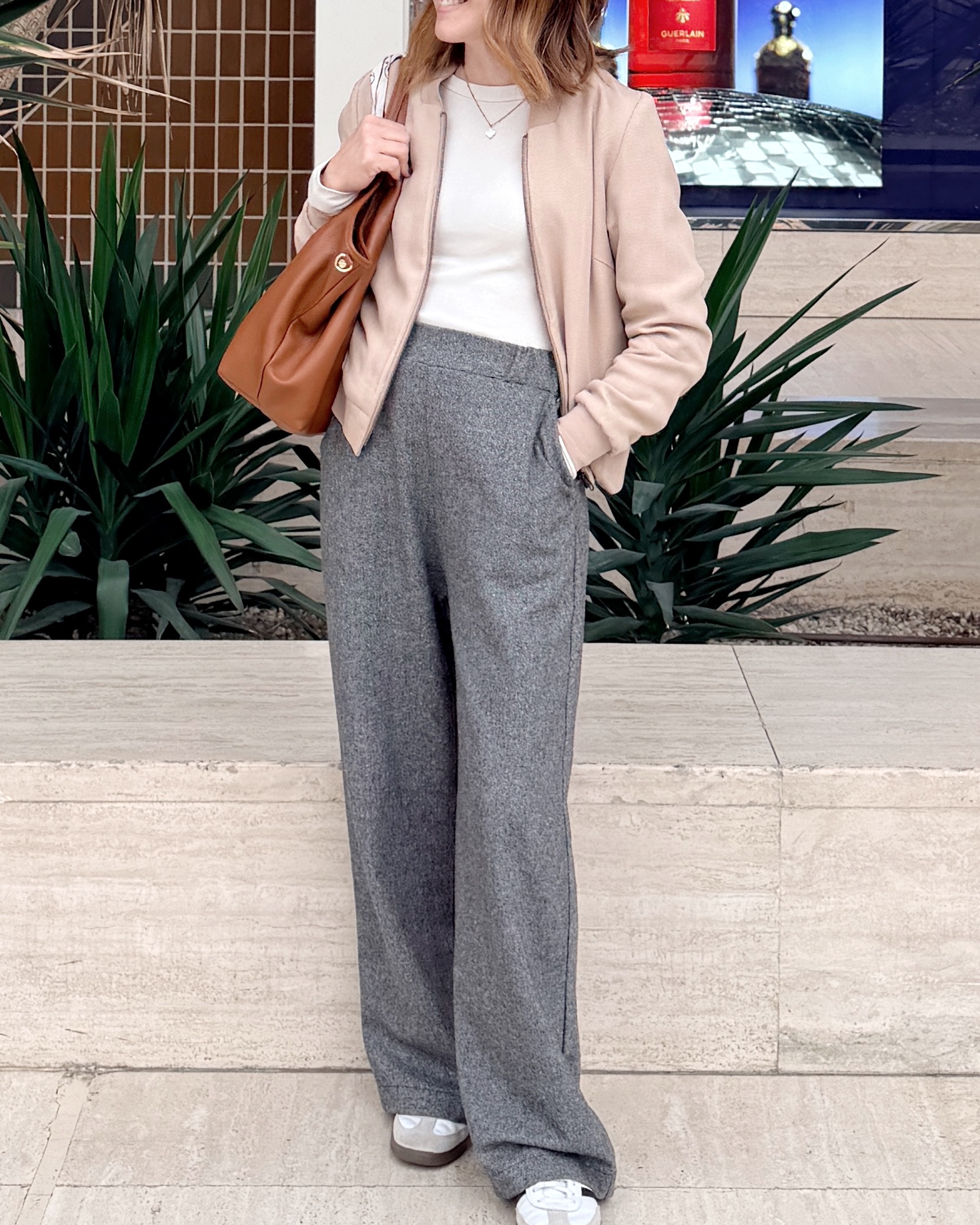
    • Grey wool
    • Gingham washed linen (shorts hack)

    They fit, they suit my style, and I reach for them constantly — which is exactly what you want from a pattern. If a pattern earns repeat use, it’s doing something right. I also find this pattern great for tweaking and changing the waistband into either flat or drawstring and it works so well as shorts too (as I discovered this year!).

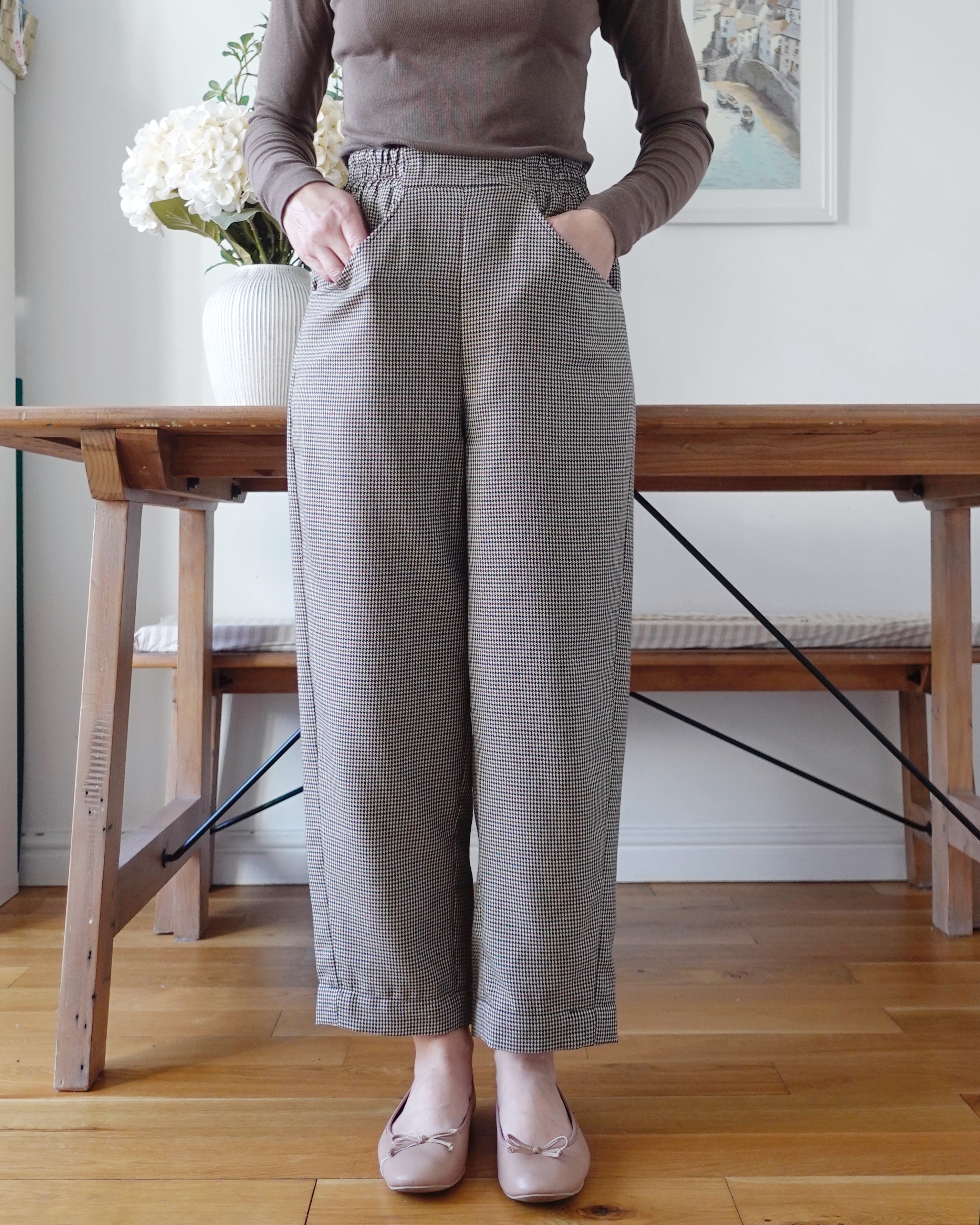
    I also made Winnie Trousers (Tilly and the Buttons) in brown check, which were a really nice change of silhouette from my usual wide leg while still fitting into my wardrobe and working well with a lot of what I already own.

    Cosy Knits & Lounge Wear

    Autumn and winter sewing leaned heavily into comfort.

    I made:

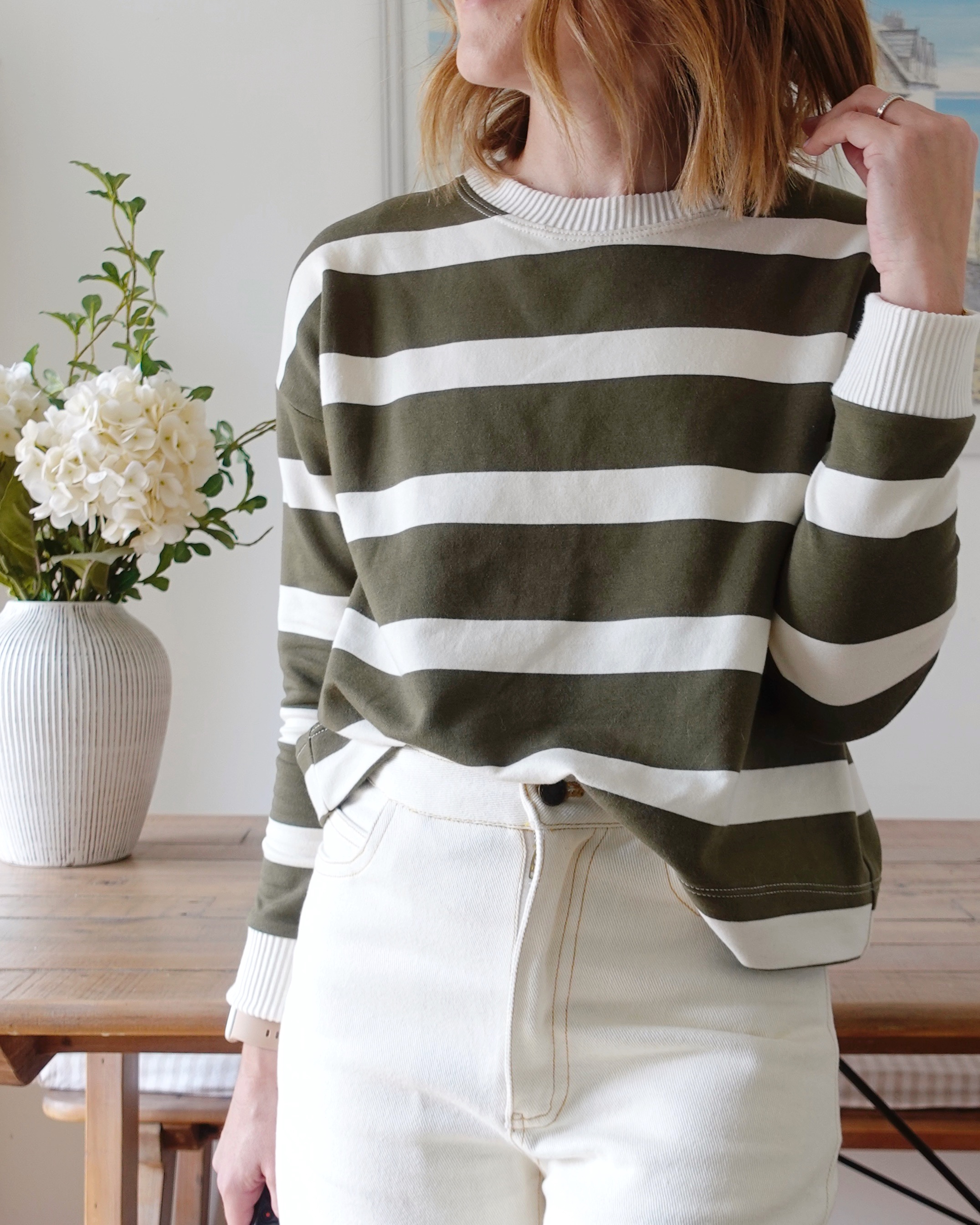
    • Jarrah Sweater (Megan Nielsen) in green stripe sweatshirt fabric by Meet Milk
    • Jarrah Sweater again as part of a crochet lace knit set with the Lana Skirt (Sew Over It) — a fun experiment and something a bit different
    • Toaster Sweater (Sew House 7) in stripe French terry
    • Toaster Sweater in cream Lima knit
    • Toaster Sweater / Coco Top mash-up in stripe French terry

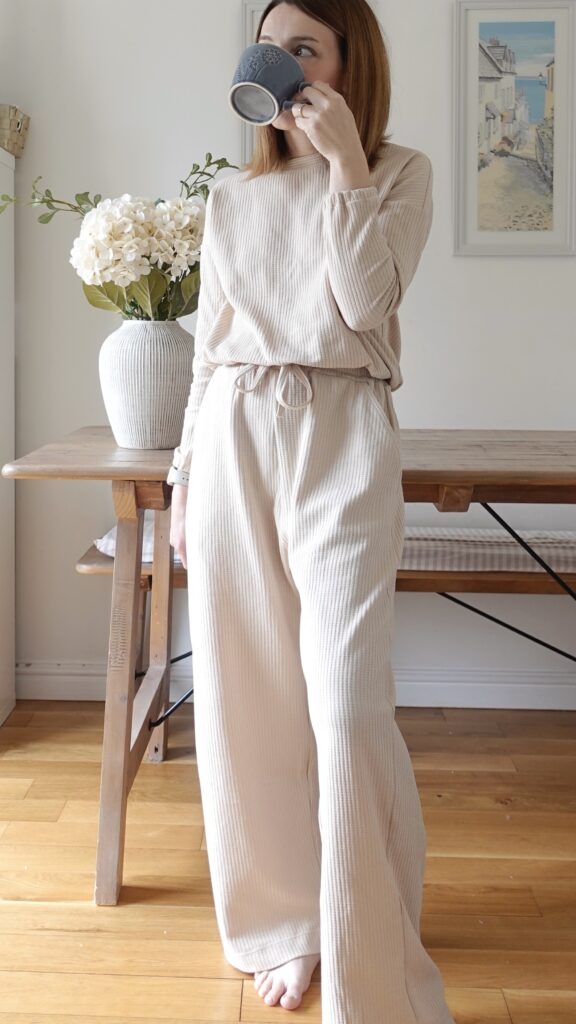
    I also sewed a lounge set using the Jarrah Sweater + Tyra Trousers in cream waffle knit, which has quickly become my “I’m at home but still want to feel put-together” outfit.

    Bags, Skirts & Outerwear

    Not everything was clothing (but most was)!

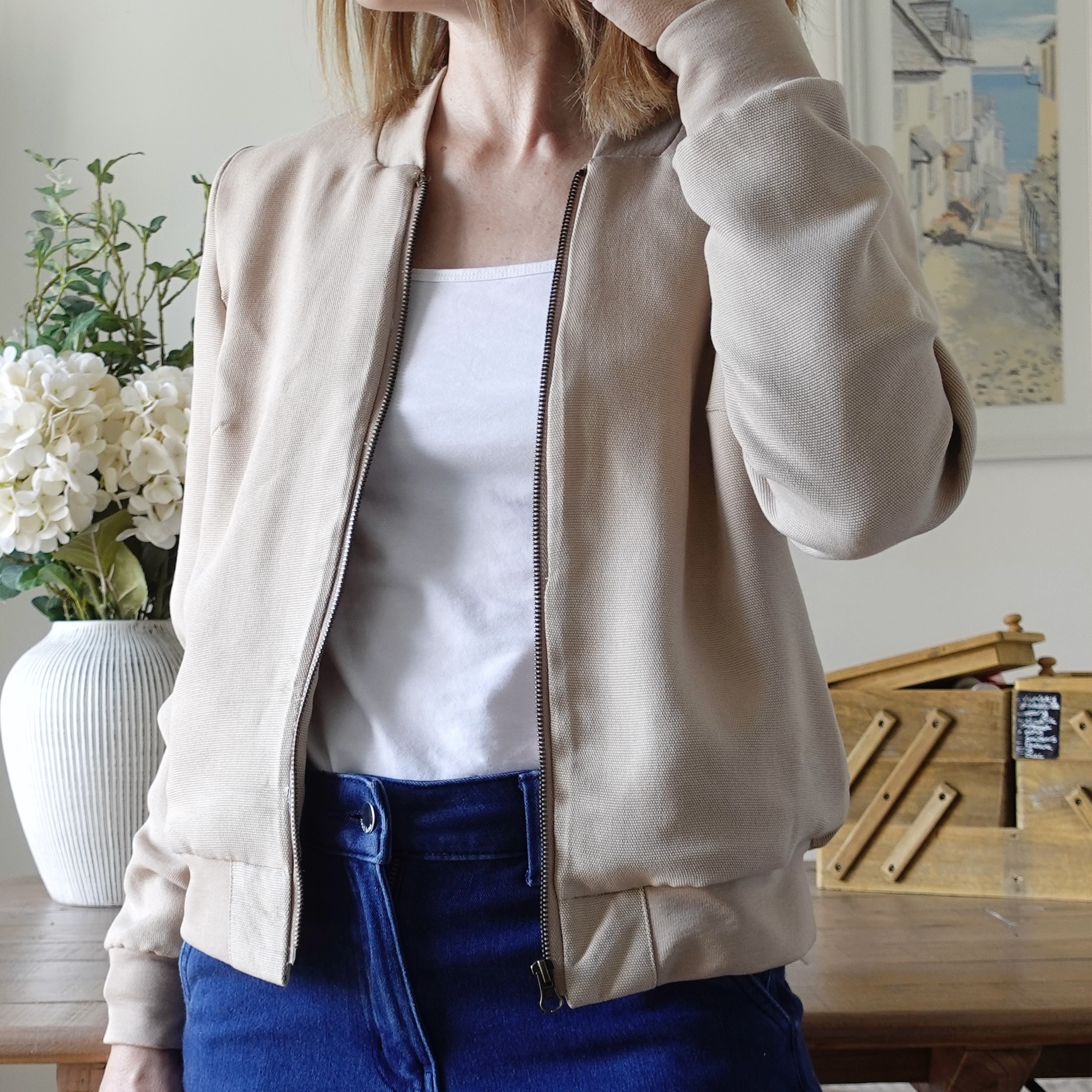
    Amelia Bomber Jacket (Wardrobe by Me) — a slightly braver make, and one I’m really proud of. I loved sewing this up with my Patreon members.

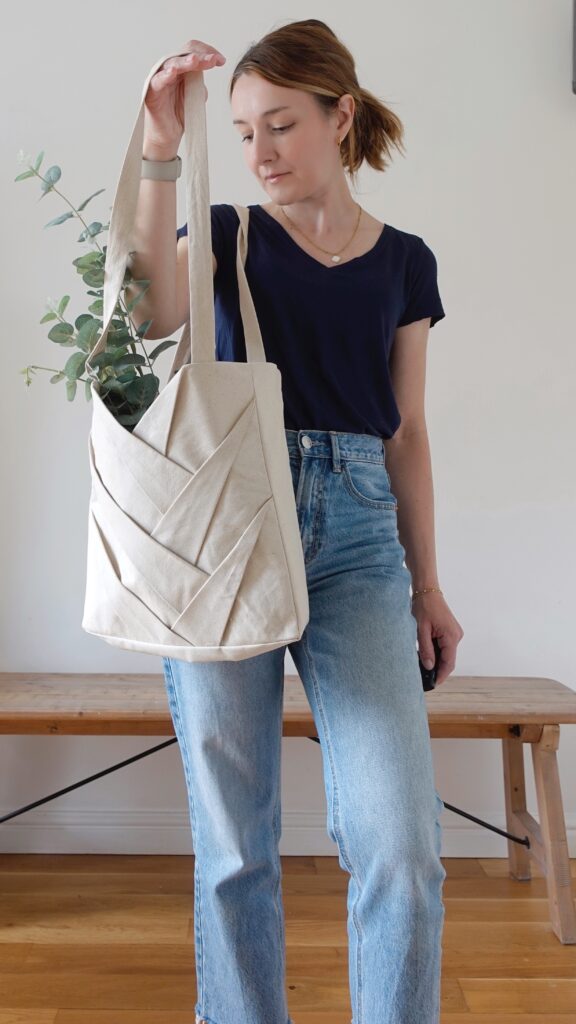
    Xenta Tote (Forget Me Not Patterns) in cream cotton canvas – practical and sturdy

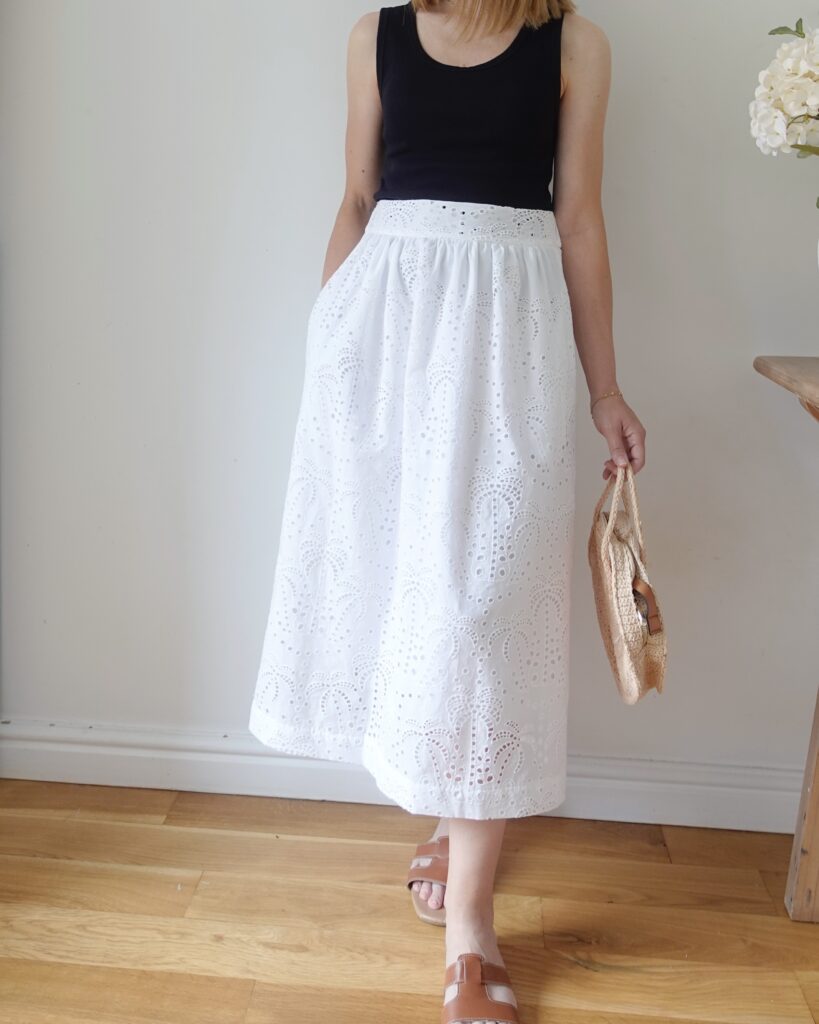
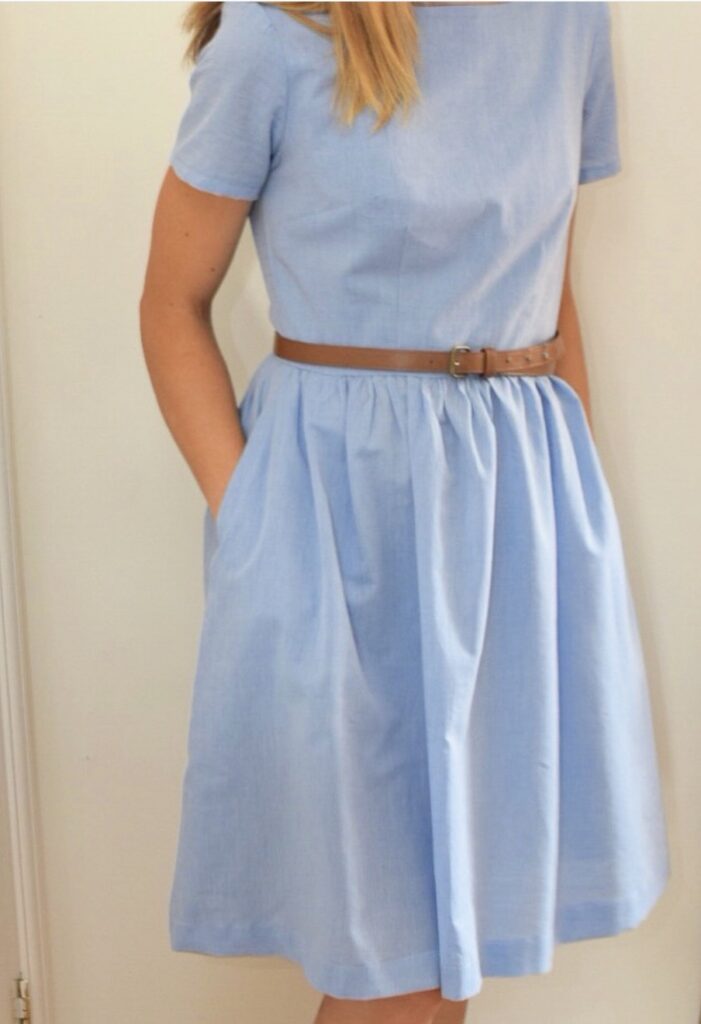
    White gathered skirt with pockets in broderie anglaise – self-drafted and probably one of the best fitting skirts I own!

    What I Learned From Sewing All This

    Looking back, a few things really stand out:

    • I wear simple shapes in beautiful fabrics far more than complicated designs.
    • Repeat patterns are a good thing — they save on fitting time and deliver predictable results.
    • Matching sets make getting dressed easier (and feel intentional).
    • Sewing for my real life — not a fantasy wardrobe — leads to far fewer regrets.

    Looking Ahead

    I’m heading into the new year with a clearer idea of what I actually love wearing and sewing. Expect more wardrobe workhorses, fewer “just because” projects, and lots of thoughtful fabric choices.

    If you’d like to hear me chat through these makes in more detail (including a photo of every single make), you can watch the full video over on YouTube, where I share my favourites, flops, and plans for the year ahead (and also get a bit more personal about what went a bit wrong at the end of the year!).

    And I’d love to know — what was your favourite make this year?

    Happy sewing,
    Sally x

    Ps. Don’t forget to subscribe to my mailing list for more sewing tips!!

  • A High Street Inspired Gingham Blouse for Autumn

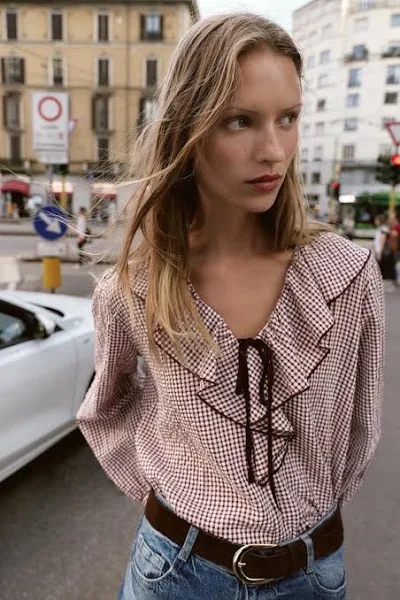
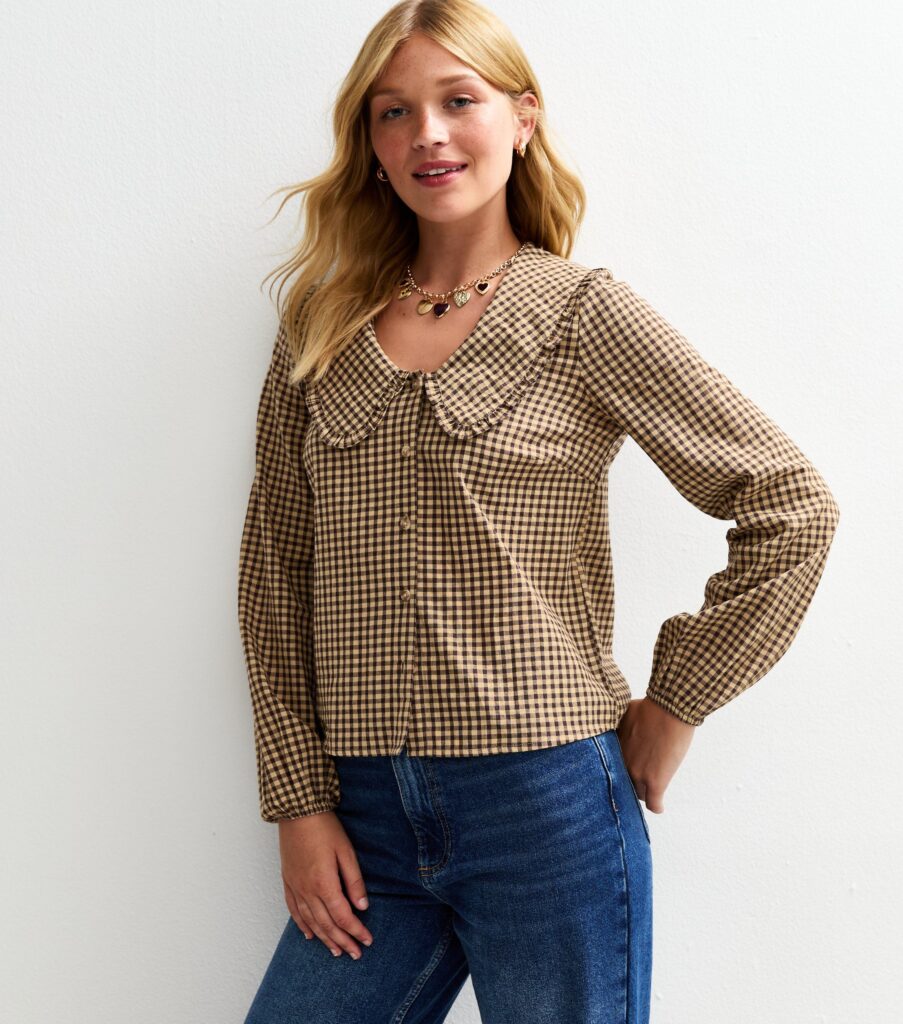
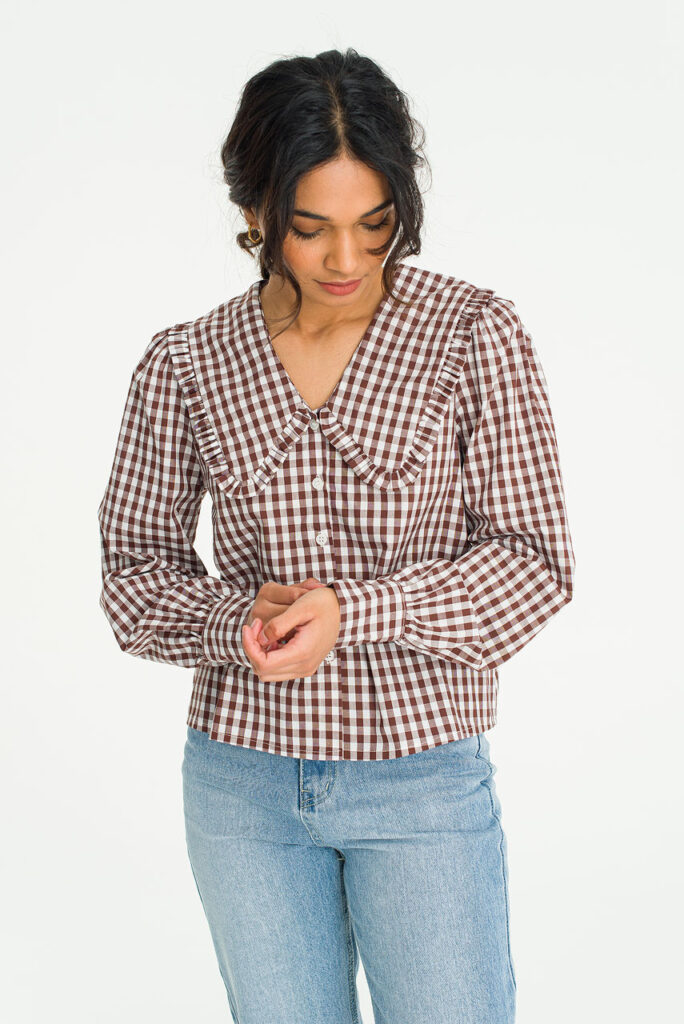
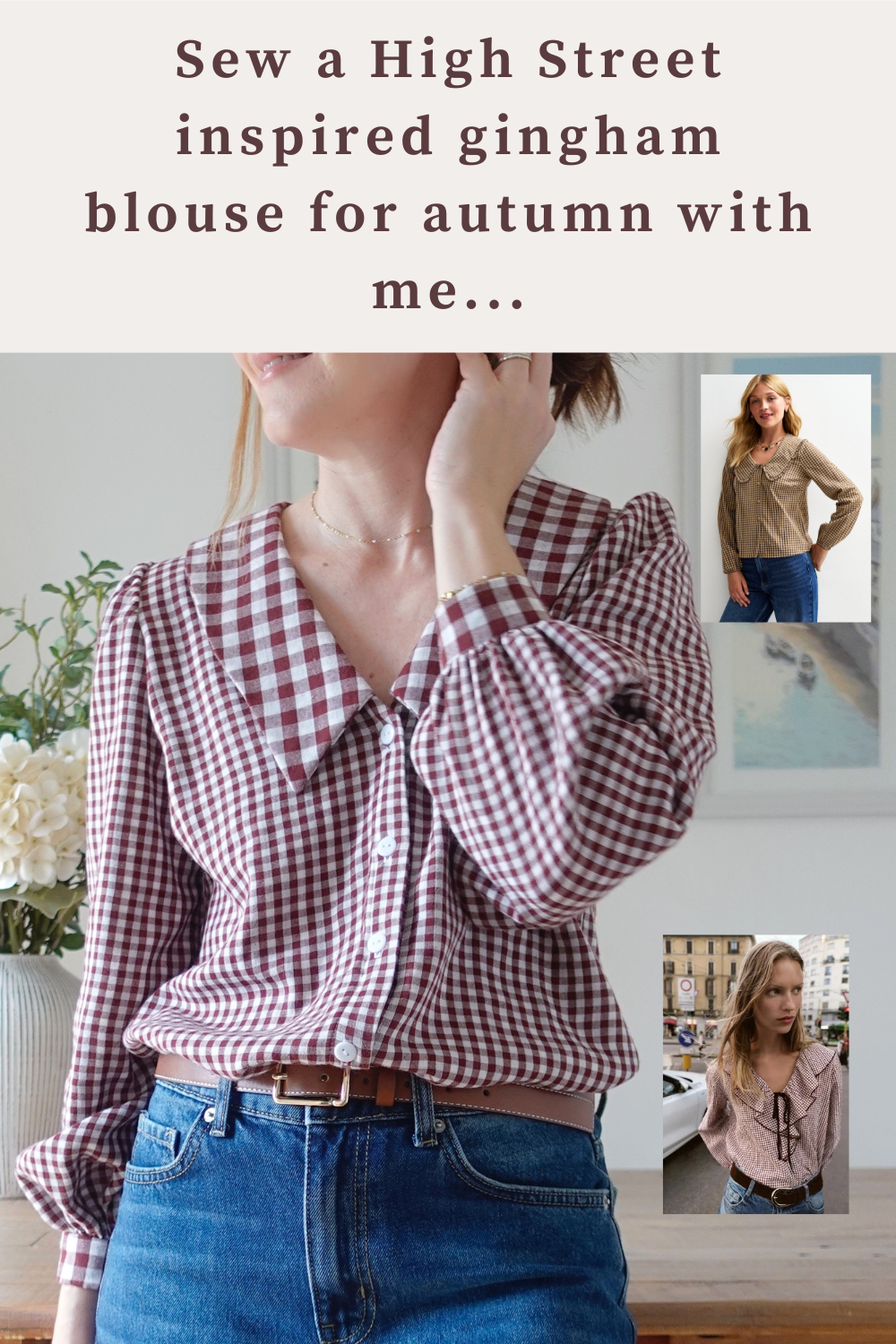
    I don’t know about you, but I’ve been feeling so inspired by all the lovely gingham blouses popping up on the High Street this autumn. There are so many gorgeous variations — from ruffled sleeves to collars trimmed with ric rac or delicate frills. They’re just too cute to resist, so of course, I had to have a go at sewing my own take on the trend!

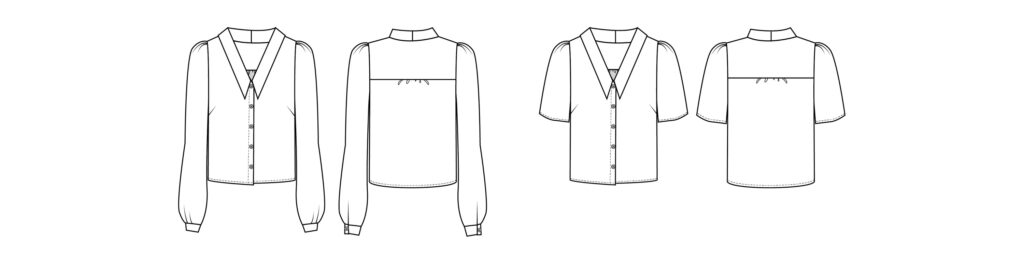
    Blouses are one of my absolute favourite things to sew, so I already had a few pattern options in my stash. But the one that really stood out to me for this gingham trend was the Patina Blouse by Friday Pattern Co. — it just had the perfect mix of classic and feminine details I was after!

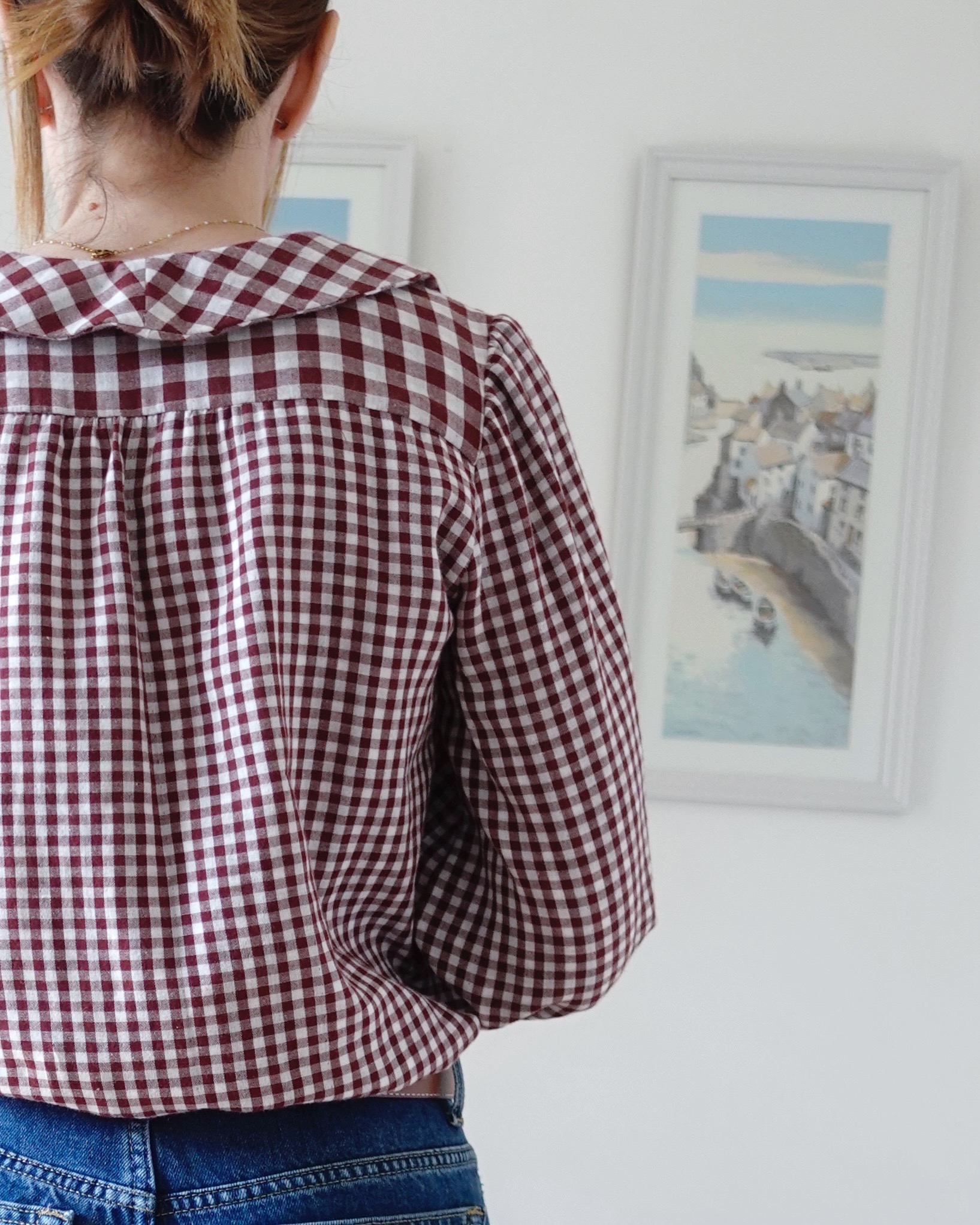
    I’ve made this blouse a few times before, and I absolutely love its vintage-style V-neck and flat collar. It also features some really beautiful details and finishes, like the gathered back yoke sewn using the burrito method (one of my all-time favourite techniques!) and the gathered sleeves finished with a button placket and cuff.

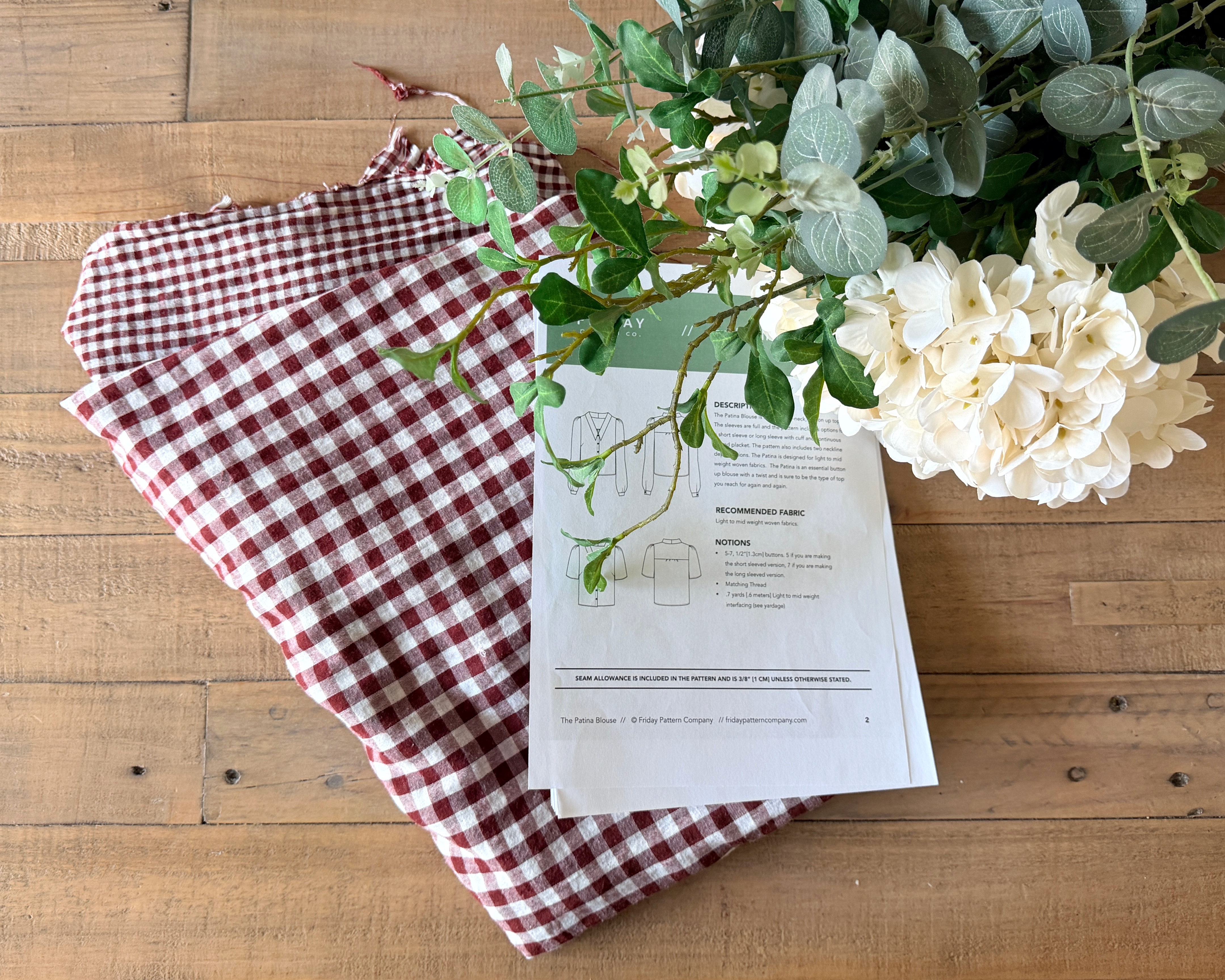
    Gingham is quite a different fabric choice for me — it’s not something I’ve worn much in the past — so I wanted to keep it fairly understated and subtle. I’d had my eye on this gorgeous double gauze cotton gingham from Atelier Brunette for quite a while, and I thought it would be perfect for the look I had in mind. It’s definitely on the more premium side, but in my experience, Atelier Brunette fabrics are well worth the investment for their quality. This one is beautifully soft with a lovely warmth to it, and I couldn’t have been happier when it arrived. I chose the colour Rust, which ties in perfectly with the autumn theme.

    As you can see from the photo above, this fabric is reversible — it features a different sized gingham check on each side. I really wanted to make the most of this fun detail, so I decided to mix and match the two sides across different parts of the blouse.

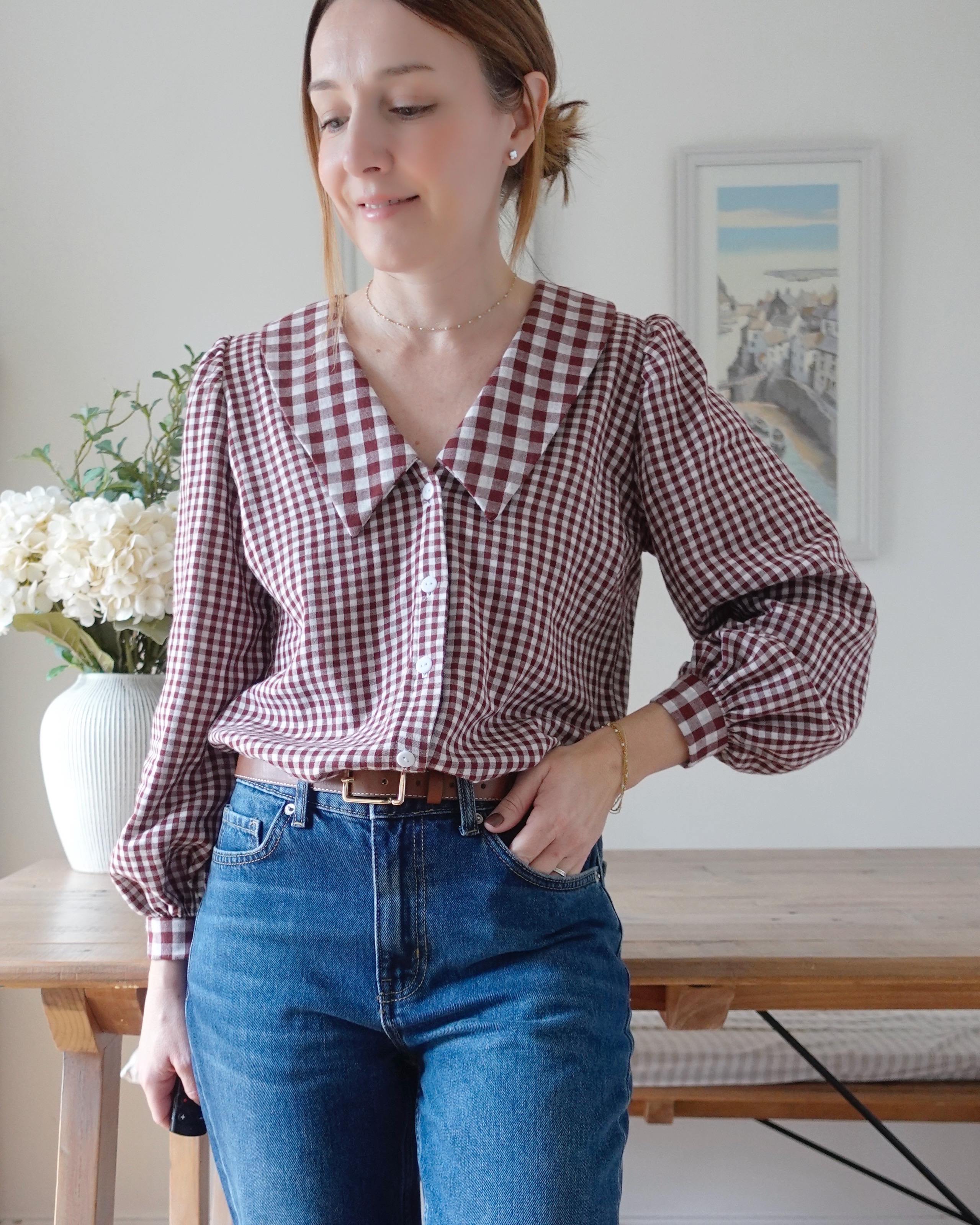
    At first, I considered using the larger check for the main body and the smaller check for the collar, yoke, and cuffs. But after laying everything out on the table, I realised the larger check felt a bit too bold for the look I was going for. In the end, I preferred the subtlety of the smaller check for the main body, with the larger check used as a gentle accent for the collar and other details — and I’m so glad I made that choice!

    Once everything was cut out, I set to work sewing the blouse together — and, as always, it was such a pleasure to sew. I absolutely love Friday Pattern Co. patterns; their instructions are always so clear, and they often include helpful sew-along videos on their YouTube channel.

    If you’d like to see more of my sewing process and join me for a cosy couple of days making this blouse, you can watch my sewing vlog over on YouTube here.

    I couldn’t be happier with how this blouse came together — it turned out even better than I imagined! There’s something about the mix of the Patina’s vintage-inspired shape and the rustic charm of the gingham that feels both timeless and fun. It’s a perfect piece for the colder months ahead, and I know it’s going to be one of my most-worn makes this season.

    I hope you like how my blouse turned out? Is a gingham blouse on your ‘to-sew’ list for autumn and if so, what sewing pattern will you be using?

    Thanks for reading and happy sewing!

    Sally xx